Mylar Bags Pro works with snack brands every week, and one question comes up again and again: which chips mylar bags actually protect the product and still look good on a shelf? A bag of chips loses its crunch fast once air and moisture get in, so the packaging carries more weight than most founders expect. This guide walks through the material choices, the printing process, real cost ranges, and what separates a solid supplier from a shaky one.
Who is this for? Anyone launching a chip brand, switching co-packers, or trying to cut packaging spend without wrecking shelf life. We wrote it the way we'd explain it to a client sitting across the table, no jargon, no filler.
Chips are fragile. Oxygen turns oil rancid, humidity softens the crunch, and light can fade both color and flavor over time. A metalized mylar film blocks all three, which is why it became the default choice for savory snacks decades ago and still holds that spot.
The category keeps growing. The global snack flexible packaging market is on track to reach roughly USD 7.47 billion in 2025 and climb to about USD 9.90 billion by 2030, according to Mordor Intelligence (2025). Food and beverage products already account for 72.1% of the broader flexible packaging market, per IMARC Group (2024), and chips sit near the top of that list.
For a small brand, the appeal is practical. A short run of custom chips mylar bags costs less than tooling a rigid container, ships flat before filling, and gives a co-packer flexibility on bag size as recipes change.
Not every snack needs the same barrier level or bag shape. A shoestring fry sits differently than a thick-cut kettle chip, and a small-batch brand has different volume needs than a national one.
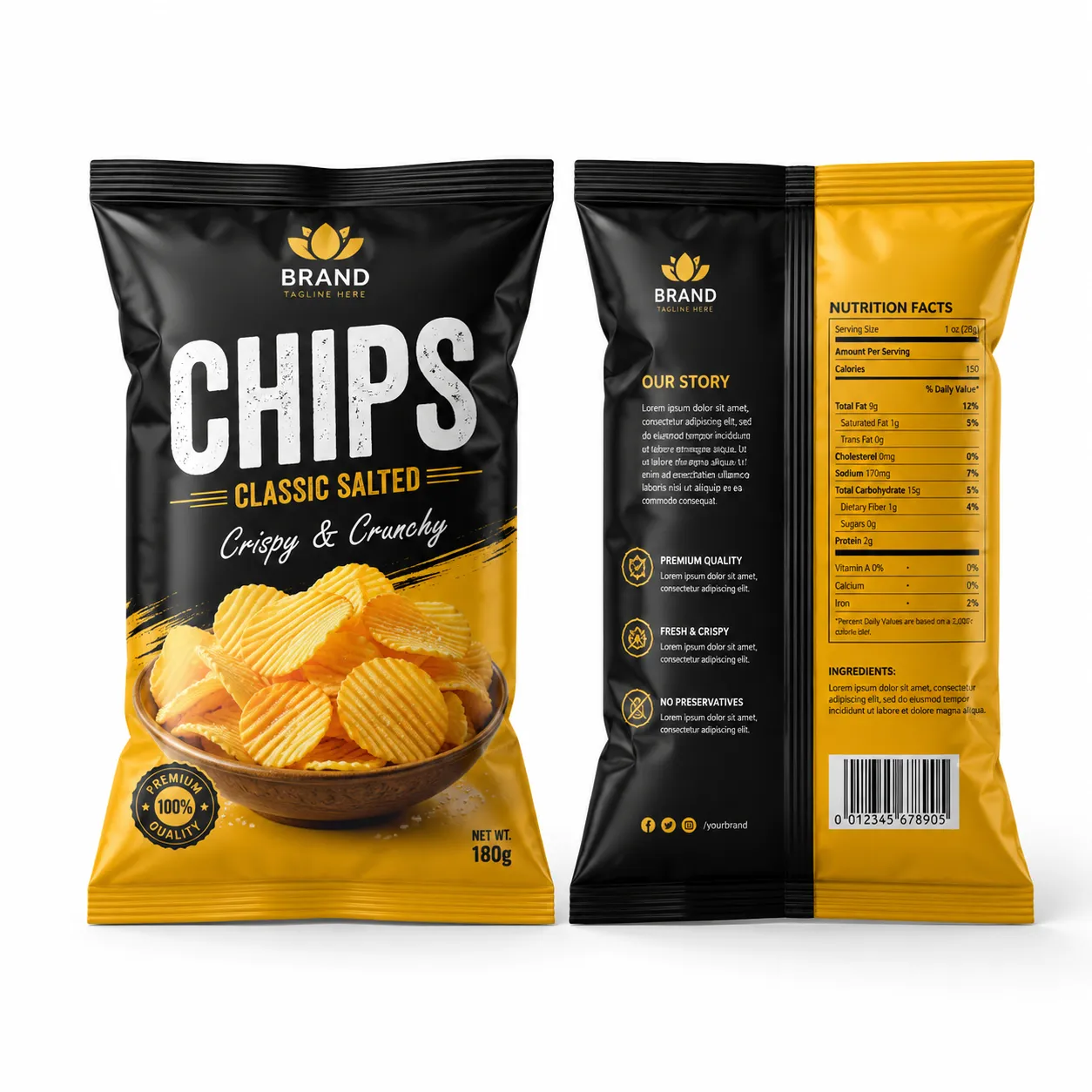
Stand-up pouches dominate the category because they hold their shape on a shelf and free up counter space for retailers. Flat bottom bags offer even more shelf presence and a wider base for premium positioning. Side gusset bags stay closer to the classic chip-bag look shoppers already recognize. Roll stock, used on vertical form-fill-seal machines, suits brands running high volume through automated lines.
|
Bag Type |
Material |
Barrier Protection |
Best For |
Avg. MOQ |
|
Stand-up pouch |
Metalized PET/foil laminate |
High |
New brands, retail shelf |
1,000–5,000 |
|
Flat bottom pouch |
Foil laminate, matte or gloss film |
High |
Premium chip lines |
2,500–5,000 |
|
Side gusset bag |
Kraft/foil laminate |
Medium–high |
Classic bag look, gift shops |
1,000–3,000 |
|
Roll stock (VFFS) |
Multi-layer PE/foil film |
High |
High-volume co-packers |
10,000+ |
A packaging consultant who advises small snack brands across the Midwest put it simply: match the bag to your fill line before you match it to your branding, because a beautiful pouch that jams a machine costs more than it saves.
Ordering chips mylar bags is not complicated once you know the sequence, but skipping a step causes most of the delays we see.
First, a supplier confirms bag style, size, and film structure based on your chip weight and fat content. Second, artwork gets converted into print-ready files, usually CMYK plus a spot color if your brand uses one. Third, the film runs through rotogravure or digital printing, then gets laminated to the barrier layer. Fourth, the laminate is slit and converted into finished pouches with zippers, tear notches, or valves added as needed. Fifth, bags ship flat to your filling line or co-packer.
A brand we worked alongside recently switched from plain kraft bags to printed stand-up pouches with a one-way degassing valve, since their kettle chips were fried in-house and needed to vent steam without letting air back in. That single change cut customer complaints about stale bags by more than half within two months.
Price swings on a handful of variables, and knowing them ahead of a quote saves back-and-forth with a supplier.
Order quantity moves the needle the most. Film gauge and barrier layers add cost but extend shelf life, which matters more for oily snacks than dry ones. Print complexity, meaning the number of colors and whether you need a window or foil accent, adds setup charges. Bag features like zippers, valves, and tear notches each carry a small per-unit cost. Rush turnaround, usually under three weeks, typically adds a premium on top of standard pricing.
Small first-run orders of 1,000 to 2,500 custom printed bags commonly land in the range of USD 0.25 to USD 0.60 per bag depending on size and film. Volume above 10,000 units usually brings that per-bag cost down by 30% to 50%.
Plenty of printers can put a logo on a bag. Fewer understand snack-specific barrier requirements, moisture control, or the food-safety paperwork retailers ask for.
Ask a potential supplier about food-contact compliance first. In the United States, packaging materials touching food fall under FDA 21 CFR guidelines, and the EU applies its own food-contact material regulation. A supplier that can't answer basic compliance questions is a red flag, not a minor gap.
A specialist that focuses on snack and chip packaging, companies like Mylar Bags Pro among them, will have already solved the barrier and venting questions that trip up a general print shop. That kind of specialist has typically run trials on grease resistance and seal strength, carries the right insurance for food-contact production, and knows how film gauge interacts with fry oil over a shelf life of six to twelve months. A general commercial printer often has none of that testing behind them, which shows up later as complaints about stale or leaking bags.
Beyond compliance, weigh minimum order quantity against your production volume, ask for a sample pack before committing to a full run, and confirm turnaround time in writing.
What are chips mylar bags made of? Most are a laminate of metalized PET or aluminum foil bonded to a polyethylene sealant layer, sometimes with an outer print layer of matte or gloss film for branding.
How much do custom chips mylar bags cost? Small runs of 1,000 to 2,500 bags typically run USD 0.25 to USD 0.60 per bag. Larger orders above 10,000 units bring that cost down significantly through volume pricing.
What is the minimum order quantity for custom printed mylar bags? Most suppliers set MOQs between 1,000 and 5,000 units for stand-up pouches, though roll stock for automated fill lines often starts at 10,000 or more.
Do chips mylar bags need FDA approval? The bags themselves don't get individually approved, but the materials used in food-contact layers must comply with FDA 21 CFR food-contact regulations in the United States, or the equivalent standard in your country.
How long do chips stay fresh in a mylar bag? A properly sealed, high-barrier mylar bag can keep chips fresh for six to twelve months, depending on fat content, fill process, and whether a nitrogen flush is used.
Can I get chips mylar bags with a resealable zipper? Yes, most suppliers offer zipper closures, tear notches, or one-way degassing valves as add-on features for an additional per-unit cost.
What size mylar bag do I need for chips? Bag size depends on fill weight and chip density. A 1-ounce single-serve bag is much smaller than a 5-ounce or family-size bag, so most suppliers ask for target fill weight before recommending dimensions.
Are mylar chip bags recyclable? Standard multi-layer mylar laminates are generally not curbside recyclable due to mixed materials, though mono-material recyclable film options are becoming more available for brands prioritizing sustainability.
How do I order chips mylar bags for a small snack brand in the US? Small US brands typically start with a supplier that offers low MOQs, digital printing for shorter runs, and domestic shipping to avoid long import lead times common with overseas printers.
What's the difference between a stand-up pouch and a side gusset bag for chips? A stand-up pouch has a flat bottom that lets it sit upright on a shelf, while a side gusset bag has folded side panels and lays flatter, closer to the traditional chip bag shape.
Do chip bags need nitrogen flushing? Nitrogen flushing displaces oxygen inside the sealed bag, which slows oil oxidation and helps maintain crunch. It's common for kettle and fried chips but not strictly required for all products.
How fast can a custom mylar bag order be produced? Standard turnaround runs three to five weeks from approved artwork. Rush production is available from some suppliers but usually adds a cost premium.
Picking chips mylar bags comes down to matching barrier protection, bag style, and cost to your actual production volume, not to whichever option looks flashiest in a catalog. Start with a sample pack, confirm the film handles your fry oil and shelf-life target, and get compliance answers in writing before placing a full order. If you want help narrowing down bag style and film for your specific chip line, Mylar Bags Pro offers sample packs and can walk through options based on your fill weight and target shelf life