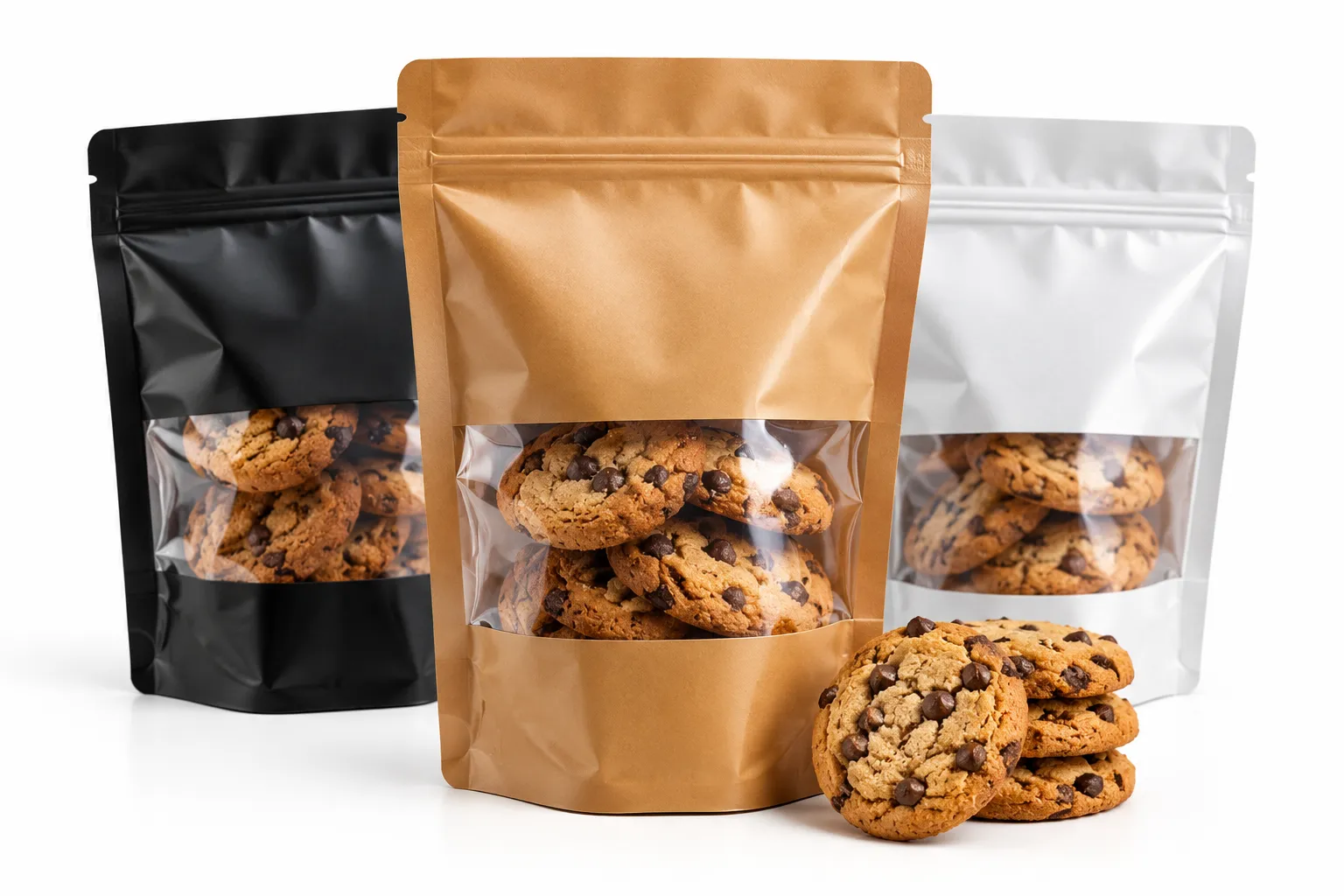
A batch of cookies loses its snap fast once air and moisture get in. That's the problem custom cookies mylar bags solve. At Mylar Bags Pro, we work with home bakers, small bakeries, and larger commercial kitchens who need packaging that keeps flavor and texture intact from the oven to the customer's hands. Custom cookies mylar bags use a layered film that blocks oxygen, light, and moisture, so cookies stay crisp or chewy exactly as they were baked, sometimes for weeks past what a plain plastic sleeve can manage.
Why does this matter so much for cookies specifically? Butter-heavy doughs go stale or rancid faster than dry crackers, and soft cookies dry out the moment they're exposed to open air. Bakers who switch to custom cookies mylar bags usually notice fewer returns and fewer complaints about staleness within the first few orders.
A cookies mylar bag is built from a few thin layers pressed together: an outer film for printing and strength, a middle barrier layer of aluminum or metallized film, and an inner heat-seal layer that touches the food. That middle layer is doing most of the work. It stops oxygen from reaching the cookie, which slows down the fat oxidation that makes baked goods taste stale or "off."
Bakeries choose this style of pouch over plain cellophane or paper bags for three main reasons. First, the barrier keeps cookies fresh far longer without preservatives. Second, the surface prints cleanly, so a logo or flavor label looks sharp instead of smudged. Third, a resealable zipper lets customers close the bag between snacks, which paper bags simply can't do.
Home bakers selling at farmers markets and small business owners shipping cookies by mail both run into the same problem: a few days in transit or on a shelf, and a cookie that was soft goes hard, or one that was crisp goes chewy. Food-grade mylar pouches solve this by keeping the internal environment stable no matter how long the bag sits closed.
Not every cookie needs the same bag. A soft-baked cookie shipped across the country needs a thicker, stronger barrier than a crisp shortbread sold same-day at a local shop. Picking the wrong thickness either wastes money on packaging you didn't need or leaves your cookies under-protected.
Custom mylar bags for cookies generally come in a few standard builds. Thinner films work fine for quick retail turnover. Thicker, foil-laminated films suit mail order and long shelf life. Clear-window bags let the cookie sell itself on a shelf, while fully opaque bags protect flavor and color from light exposure during long storage.
| Bag Type | Typical Thickness | Best For | Resealable |
|---|---|---|---|
| Standard PET/AL/PE laminate | 3.0–3.5 mil | Retail shelf, short shelf life | Yes, zipper add-on |
| Heavy-duty foil laminate | 4.5–5.0 mil | Mail order, long shelf life | Yes |
| Clear-window mylar pouch | 3.0 mil | Farmers markets, in-person sales | Optional |
| Kraft-look metallized film | 3.5 mil | Boutique branding, gift boxes | Yes |
Each option has a trade-off. The clear-window bag sells well visually but lets in more light, so it suits cookies that move fast rather than sit in storage. The heavy-duty laminate costs a bit more per unit but earns that back in fewer damaged or stale returns during shipping.
Ordering custom cookies mylar bags follows a fairly predictable process, whether you're printing 500 bags or 50,000. Here's what happens between placing the order and cookies going in the bag:
You send over your design or work with a designer to build one from scratch, matching your bag size, flavor variety, and any required allergen labeling. The printer runs a digital proof so you can check colors, spacing, and text before anything goes to press. Once approved, the film gets printed, laminated with the barrier layer, and cut and sealed into the finished pouch shape, whether that's stand-up, flat, or gusseted. Finished bags are quality-checked for seal strength and print accuracy, then boxed and shipped.
A licensed food packaging consultant we work with often reminds new clients that print-ready artwork saves the most time in this process. Sending a low-resolution logo or a design without bleed margins is the single biggest cause of delays in custom bag orders.
Pricing on custom cookie packaging swings on a handful of variables, and knowing them ahead of time makes budgeting easier. Order quantity is the biggest lever: unit price drops sharply once you cross common tiers like 500, 1,000, and 5,000 bags. Number of print colors matters too, since a simple one-color design costs less than full-color photographic printing.
Bag thickness and size also shift the price, with heavier laminates and larger formats costing more per unit. Add-ons like resealable zippers, tear notches, or degassing valves each add a small amount per bag but often pay for themselves in fewer customer complaints. Rush production, when you need bags in under two weeks, typically carries a premium over standard four-to-six week turnaround.
A small home bakery ordering 500 bags with one print color will pay noticeably more per unit than a commercial kitchen ordering 10,000 bags in full color. Getting a quote at a few different quantity tiers helps you see where the per-unit price starts to level off.
Picking a packaging partner matters as much as picking the bag material. What separates a good provider from an average one? Look for three things: FDA food-contact compliance documentation, a real digital proofing step before production, and low minimum order quantities if you're a smaller operation.
A supplier that works specifically with food-grade packaging, like Mylar Bags Pro, will already know the shelf-life math for cookies and can recommend a thickness without a long back-and-forth. That's different from a general packaging printer that treats a food pouch the same as a retail poly bag. Ask any provider directly whether their inner layer is certified for direct food contact under FDA 21 CFR guidelines, and ask to see a sample before committing to a full production run.
Turnaround time and communication matter just as much as price. A provider who answers questions clearly and sends proofs on schedule saves you from the kind of delays that push a product launch back by weeks.
They're typically built from layers of polyester (PET) film, a barrier layer of aluminum foil or metallized film, and a food-safe inner sealant layer. This combination blocks oxygen, moisture, and light while keeping the inner surface safe for direct contact with baked goods.
Yes, when the inner layer meets FDA 21 CFR food-contact standards. Reputable suppliers document this compliance and can share certification details on request. Always confirm the inner layer's food-contact rating before ordering, especially for bags touching cookies directly without a liner.
Pricing depends on quantity, print colors, bag size, and thickness. Small orders of a few hundred bags cost more per unit than orders in the thousands. Most suppliers offer tiered pricing, so requesting a quote at two or three quantities helps you compare real numbers.
Minimums vary by supplier and print method. Digital printing allows smaller runs, often starting around 100 to 500 units, while traditional plate printing usually requires larger minimums to be cost effective. Ask your supplier which print method fits your order size best.
Generally, yes. The barrier layer in mylar packaging blocks oxygen and moisture far more effectively than standard plastic film, which slows staling and fat oxidation. Soft and butter-heavy cookies benefit the most from this extra protection during shipping or extended storage.
Most suppliers offer a zipper add-on for a small per-unit cost. It lets customers reseal the bag between servings, which helps keep unfinished cookies fresh and adds a premium feel to the packaging.
Standard production usually runs four to six weeks from proof approval to shipping. Rush options exist for tighter deadlines but usually add a percentage to the total cost. Ordering ahead of a seasonal rush, like holiday cookie sales, avoids paying rush fees.
Size depends on cookie count and diameter per bag. A single large cookie typically needs a 4x6 inch pouch, while a half-dozen assortment often fits a 6x9 or 7x10 inch bag. Suppliers can recommend sizing based on your product dimensions and weight.
Selling packaged baked goods usually falls under local cottage food or commercial kitchen regulations rather than packaging-specific permits. Check your local health department's labeling requirements for allergen statements and net weight, since these apply regardless of bag material.
They offer slightly less light protection since the window lets some light through. For cookies sold and consumed within a few days, this trade-off is minor. For long-term storage or shipping, an opaque or foil-backed bag protects flavor and color better over time.
Standard multilayer mylar bags are difficult to recycle through curbside programs because of the mixed material layers. Some suppliers now offer mono-material or recycle-ready mylar alternatives, so ask specifically if recyclability matters for your brand.
Match thickness to shelf life and shipping distance. Local, fast-turnover sales work fine with a 3.0 to 3.5 mil bag. Mail order or long shelf-life products do better with 4.5 to 5.0 mil for stronger barrier protection and puncture resistance during transit.
Choosing the right packaging comes down to matching bag thickness and features to how your cookies get sold, whether that's same-day at a market stall or shipped across the country weeks later. Getting a couple of sample bags before a full production run is the easiest way to check print quality and seal strength firsthand. When you're ready to move forward, Mylar Bags Pro can walk you through thickness options and print pricing based on your order size and timeline, no pressure and no guesswork involved.