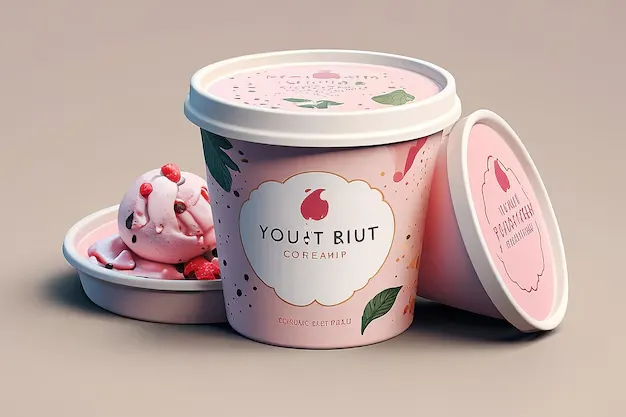
Mylar Bags Pro works with ice cream brands that need packaging built for cold storage, sealed freshness, and shelf appeal at the same time. Ice cream packaging boxes are not just containers. They carry brand identity, keep product texture intact through freeze-thaw cycles, and give a customer a reason to pick one pint over another. If you make ice cream, gelato, or frozen dessert, the box you choose affects how your product performs from the freezer to the checkout counter.
Ice cream melts fast, and packaging has to fight moisture, temperature swings, and rough handling during transport. A weak box means soggy corners, leaked product, and a brand that looks careless on the shelf. A well-built box holds its shape at sub-zero temperatures and still looks sharp when a customer opens the freezer door.
Frozen dessert makers face a packaging problem that most food categories don't. The box has to survive constant temperature drops, humidity inside the freezer, and repeated handling by staff and customers. Standard cardboard breaks down under these conditions. That's why ice cream packaging boxes use coated stock, wax linings, or laminated finishes built to resist moisture.
Have you ever picked up a pint and felt the bottom go soft in your hand? That's a packaging failure, not a product failure. The ice cream inside might be perfect, but the box already told the customer something was wrong.
Retailers also care about stacking. Boxes that hold their shape under weight let stores display more product in less freezer space. A box that collapses under a second pint stacked on top costs a retailer shelf space and costs a brand repeat orders.
Different brands need different box builds depending on batch size, price point, and how the product ships. Small-batch gelato makers often want a premium finish. Wholesale ice cream producers need boxes that survive pallet stacking and long-distance shipping.
|
Box Type |
Avg. Cost (per 1,000 units) |
Moisture Resistance |
Best For |
Maintenance |
|
SBS coated cardboard |
280–420 |
Moderate |
Retail pints, small batches |
Store in dry, cool area |
|
Corrugated with wax coating |
350–500 |
High |
Wholesale, bulk shipping |
Minimal, freezer-stable |
|
Kraft board with lamination |
300–450 |
Moderate to high |
Eco-focused brands |
Keep away from direct sun |
|
Rigid box with foil stamping |
600–900 |
High |
Premium and gift lines |
Handle with care during transit |
Kraft-based boxes appeal to brands chasing a natural, sustainable look, but they need a lamination layer or they'll absorb moisture within hours in a working freezer. Corrugated wax-coated boxes cost more upfront but survive long shipping routes without collapsing. Rigid boxes work well for gift sets or limited releases where unboxing matters, though the cost per unit runs highest.
Getting from blank cardboard to a finished, branded ice cream packaging box follows a fairly predictable sequence, even though details shift by supplier.
First, the printer takes your logo, color codes, and product information and builds a die-line template matched to your box dimensions. Second, the file goes through a proof stage where you check colors, spacing, and nutritional or ingredient text placement. Third, the printer runs the stock through offset or digital printing depending on order volume. Fourth, the boxes get coated or laminated for moisture resistance. Fifth, they're die-cut, folded, and glued into flat-pack or pre-formed units ready for shipping.
Digital printing suits smaller runs, generally under 2,500 units, since there's no plate setup cost. Offset printing brings the per-unit cost down significantly on larger runs but requires a plate charge upfront. According to the Printing Industries of America (2022), digital short-run printing has grown steadily as more food brands test smaller batches before committing to bulk offset orders.
A handful of variables push ice cream packaging box pricing up or down, and knowing them helps you budget accurately before you request quotes.
Box size and pint or quart capacity change material use directly. Print complexity matters too. A single-color print costs far less than a four-color process print with foil accents. Coating type adds cost, since wax and lamination both require an extra production step. Order volume brings per-unit cost down sharply once you cross common break points like 1,000, 5,000, or 10,000 units. Rush turnaround adds a premium, often 15 to 25 percent above standard lead time.
According to the Paperboard Packaging Council (2023), food-grade packaging that meets FDA direct food contact standards typically costs 10 to 20 percent more than standard packaging stock, largely due to the certified materials and coatings involved. Any brand selling in the United States needs boxes that meet FDA food contact regulations, and brands selling into the EU or UK need to check equivalent food contact material rules before placing a large order.
A gelato brand we worked with recently ran into a packaging failure right before a summer product launch. Their original supplier used uncoated kraft stock that softened within an hour inside their retail freezers. Switching to a wax-laminated corrugated box solved the collapse issue and let them keep their kraft aesthetic without the moisture failure.
Not every packaging supplier understands the specific demands of frozen food. A general print shop might handle branding well but miss the coating requirements that keep a box functional at freezer temperature. Local companies like Mylar Bags Pro focus specifically on food-grade packaging, which means they understand material behavior in cold storage, food contact compliance, and how print finishes hold up after repeated freeze-thaw cycles.
A packaging partner who works regularly with frozen food brands will ask about your storage conditions, shipping distance, and stacking needs before recommending a material. A supplier who skips those questions and jumps straight to design mockups is missing a step that affects whether your boxes actually hold up once they leave the printer.
Ask any potential supplier for a sample in the exact material and coating you're considering, then test it in your own freezer for at least 48 hours before committing to a full production run. That single step catches most moisture and structural problems before they become an expensive mistake.
Most suppliers set minimums between 500 and 1,000 units for digital printing, dropping to 250 for some small-batch specialists. Offset printing usually requires higher minimums, often starting around 2,500 units, due to plate setup costs.
Pricing typically runs from $0.28 to $0.90 per box depending on material, coating, print complexity, and order size. Larger orders bring the per-unit price down significantly.
Yes. Any box in direct contact with the product needs food-grade stock that meets FDA standards in the US or equivalent food contact regulations in the UK, Canada, Australia, and other target markets.
Wax lamination and poly coating both resist moisture well at freezer temperatures. Uncoated kraft or plain cardboard breaks down within hours of freezer exposure.
Standard turnaround runs 10 to 15 business days after proof approval. Rush production can cut that to 5 to 7 days for an added fee.
Yes. Digital printing makes runs as low as 250 to 500 units realistic for small or new brands testing a product line before scaling up.
Yes. Recyclable kraft board with a compostable lining is available from several suppliers, though it typically costs 10 to 15 percent more than standard laminated stock.
Depending on your market, boxes generally need ingredient lists, allergen warnings, net weight, and nutritional information printed in compliant font sizes under FDA or local food labeling rules.
Corrugated boxes with wax coating perform best over long shipping routes since they resist both moisture and crushing from stacked pallets.
Pint boxes typically use folding carton stock in a rectangular shape, while quart tubs are often round and made from a rigid paperboard or plastic-lined material built for scooping directly from the container.
Yes. Most suppliers offer matte, gloss, and soft-touch laminate finishes, with matte often preferred for a premium, natural brand look.
Sealed boxes without ventilation holes work best for ice cream since airflow speeds up freezer burn and ice crystal formation on the product surface.
Picking the right box comes down to matching material, coating, and print method to how your product actually gets stored and shipped. Test samples in real freezer conditions before locking in a full production run, and confirm food contact compliance for every market you sell into. If you want a packaging partner that understands frozen food specifically, Mylar Bags Pro offers sample runs and can walk you through material options based on your order size and storage needs