Small brands live and die by first impressions, and the box a product arrives in is often the first thing a customer touches. Mylar Bags Pro works with retail and food brands that want a package that looks sharp on a shelf and holds up during shipping, and custom twist top boxes come up in almost every one of those conversations. The twisted paper closure at each end gives a product a handmade, boutique feel without adding extra cost to the build. That combination of style and function is why bakeries, candle makers, and candy brands keep coming back to this box style.
This guide walks through what twist top boxes are, which materials fit different products, what the ordering process looks like, and what actually drives the price up or down. By the end you should know enough to order with confidence, whether this is your first packaging run or your fifth.
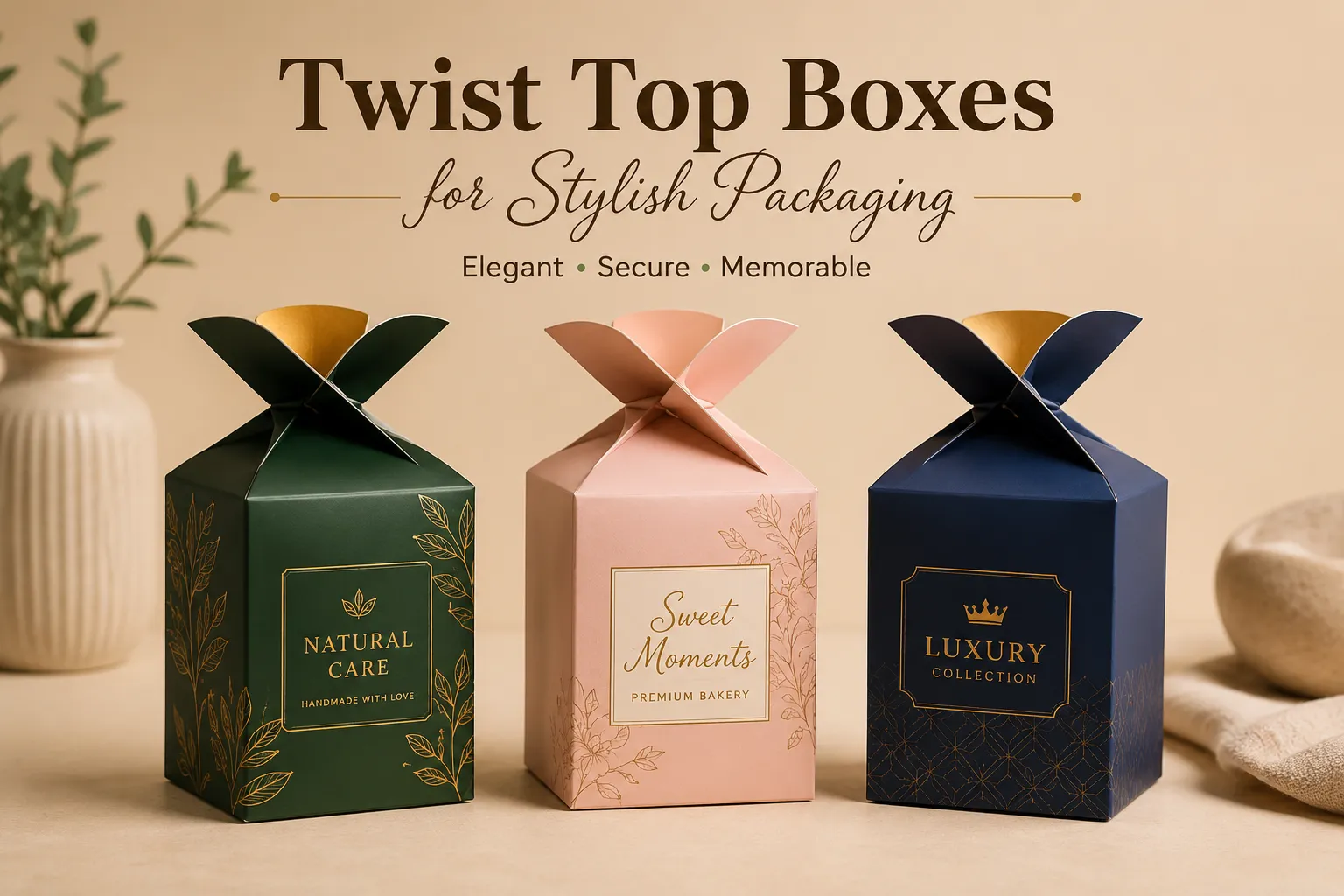
A twist top box is a rigid or semi-rigid tube or rectangular box with paper or foil ends that get twisted closed by hand, similar to how a piece of candy is wrapped. The twist closure replaces tape, glue, or a lid, which cuts down on packaging waste and gives the box a distinct, artisanal look on a shelf.
Custom twist top boxes show up most often in confectionery, bath and body products, small bakery goods, and gift sets. Why does that matter for a brand trying to stand out online? A product that photographs well and unwraps in an interesting way tends to get shared more, and that free exposure is worth more than most paid ads.
The style also solves a practical problem. Products like caramels, bath bombs, or loose tea need a container that seals well enough to keep moisture and air out but opens easily by hand. A twist top box does both without hardware, hinges, or extra inserts, which keeps production simple and the unit cost low.
Not every twist top box is built the same way, and the material you pick changes how the box performs and what it costs. Kraft paper twist boxes are the most common choice for food items because the material is compostable and takes rustic, hand-drawn print styles well. Rigid cardboard tubes with foil-lined ends work better for products that need a barrier against light or moisture, such as coffee or dried herbs.
Some brands ask for a clear plastic window on one end so the product shows through before the customer opens it. That option adds a small cost but tends to increase impulse purchases at retail counters. A licensed packaging consultant based in Ontario, who works with small-batch confectioners, put it simply: "Customers buy with their eyes first. A window on a twist top box does more for sales than an extra ounce of product ever will."
|
Material Type |
Avg. Cost (500 units) |
Best For |
Recyclable |
Print Quality |
|
Kraft paper |
$0.35–$0.55/unit |
Candy, cookies, tea |
Yes |
Good, matte finish |
|
Coated paperboard |
$0.50–$0.75/unit |
Cosmetics, soap bars |
Yes |
High, glossy or matte |
|
Foil-lined tube |
$0.65–$0.95/unit |
Coffee, dried herbs |
Partial |
Good |
|
Kraft with window |
$0.60–$0.90/unit |
Gift sets, bakery items |
Yes |
Good |
Ordering custom twist top boxes follows a fairly predictable path once you know what to expect. The process usually starts with a size and material consultation, where the supplier asks about the product weight, shelf life, and shipping method.
Next comes the artwork stage. Most suppliers ask for print-ready files in vector format, and a decent one will flag color or bleed issues before production instead of after. A short physical proof or digital mockup follows, giving you a chance to check placement, color accuracy, and closure fit before committing to a full run.
Production itself typically takes one to three weeks depending on order size and whether the boxes need custom die-cutting for a non-standard shape. Smaller orders under 1,000 units often ship faster because they can run alongside other jobs on the same press. Companies that specialize in custom packaging, including firms like Mylar Bags Pro, tend to build in a buffer for reprints on the first order so a color mismatch does not stall a launch date.
Cost is usually the first question a brand asks, and it rarely has one flat answer. Order volume plays the biggest role: a run of 250 twist top boxes can cost two to three times more per unit than a run of 2,500, since setup costs get spread across more pieces.
Print complexity adds up too. A single-color stamp on kraft paper costs far less than a full-color, multi-side print job with foil accents. According to Grand View Research (2024), the folding carton packaging segment in the United States accounted for the largest share of the North American market, a sign of how much demand there is for print-heavy, branded paperboard packaging right now. That demand has pushed more suppliers to offer shorter minimum runs at competitive rates, which helps smaller brands compete with bigger ones on shelf presentation.
Material choice, custom sizing, and add-ons like ribbon or a window all shift the total as well. Here's a fair rule of thumb: budget an extra 15 to 20 percent above the base unit price for a first order, since proofing and small-batch setup fees apply once rather than per unit on repeat orders.
Picking a supplier for custom twist top boxes comes down to more than the lowest quote on paper. Does the company offer a physical sample before full production? A supplier that skips this step is asking you to trust color and material quality sight unseen, and that is a real risk for a product photo shoot or retail launch.
A packaging specialist that focuses on twist top and custom paperboard formats will know print tolerances, minimum order quantities, and turnaround times better than a general print shop juggling ten other product categories. A specialist that works exclusively on this kind of packaging, such as Mylar Bags Pro, has usually already solved the common problems around closure tightness and print bleed on curved surfaces, which saves a first-time buyer from paying for a learning curve.
Ask about compliance too. If the box holds food, the paperboard or kraft stock needs to meet food-contact safety standards set by agencies such as the FDA in the United States or the Food Standards Agency in the United Kingdom. A supplier who cannot answer that question directly is one to skip.
A twist top box holds small, often food or gift-related products and closes by twisting the paper or foil ends by hand instead of using tape or a lid. Brands use them for candy, bath products, and bakery items where presentation matters.
Pricing runs from about $0.35 to $0.95 per unit depending on material, print complexity, and order size, with larger runs bringing the per-unit cost down. A 500-unit kraft paper order typically lands near the lower end of that range.
Kraft paper versions are compostable and widely recyclable, making them one of the more sustainable packaging choices for small food and gift brands. Foil-lined versions recycle less easily because of the mixed material.
Yes, as long as the paperboard or kraft material used is rated for food contact under standards like those set by the FDA or the UK Food Standards Agency. Ask your supplier for documentation before placing a food-related order.
Sizes vary by supplier, but most twist top boxes range from small tube formats around 1 inch in diameter up to rectangular boxes several inches wide for bakery or gift items. Custom sizing is available for products that fall outside standard dimensions.
Production usually takes one to three weeks after artwork approval, with smaller orders under 1,000 units often shipping on the faster end. Custom die-cut shapes can add extra time to the schedule.
Minimums vary widely by supplier, with some accepting orders as small as 100 to 250 units and others requiring 1,000 or more. Smaller minimums usually carry a higher per-unit price.
Yes, coated paperboard twist top boxes hold up well for solid cosmetics and soap bars since the material resists moisture better than uncoated kraft. A window cutout is a popular add-on for this category.
Most reputable suppliers include a digital mockup at minimum, and many offer a physical sample for an added fee before committing to a full print run. Skipping this step raises the risk of color or fit issues on the final product.
Offset printing gives the sharpest results for large runs, while digital printing suits smaller orders where speed and lower setup costs matter more than fine detail. Foil stamping works well for logos on premium product lines.
Food-grade twist top boxes should be stored in a dry, temperature-stable environment to protect both the packaging and its contents, and suppliers should confirm the stock meets local food-contact packaging regulations before shipping. This matters most for products with a longer shelf life.
Yes, many suppliers now offer short-run digital printing specifically for product testing and soft launches, letting a brand order a few hundred units instead of thousands. This lowers the financial risk of trying a new flavor or design before a full production commitment.
Picking the right box style is one decision among many when a product launches, and it shouldn't be the one that stalls you. A kraft paper twist top with a simple print run is a solid starting point for most food or gift products, and you can always add a window or foil accent once sales pick up. If you want a packaging partner that already understands print tolerances, food-safe materials, and short-run pricing, reach out to Mylar Bags Pro about a sample kit before your next production run