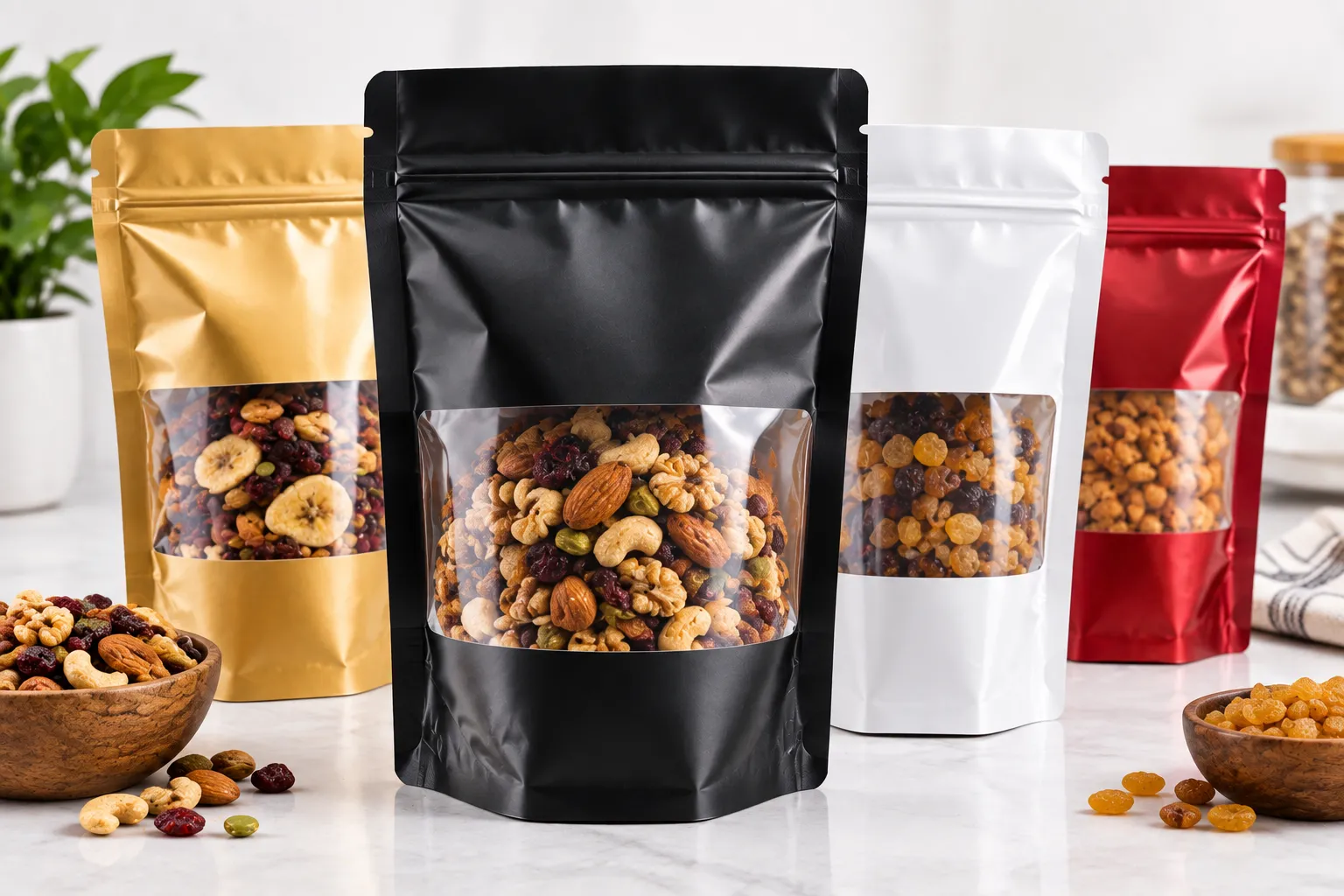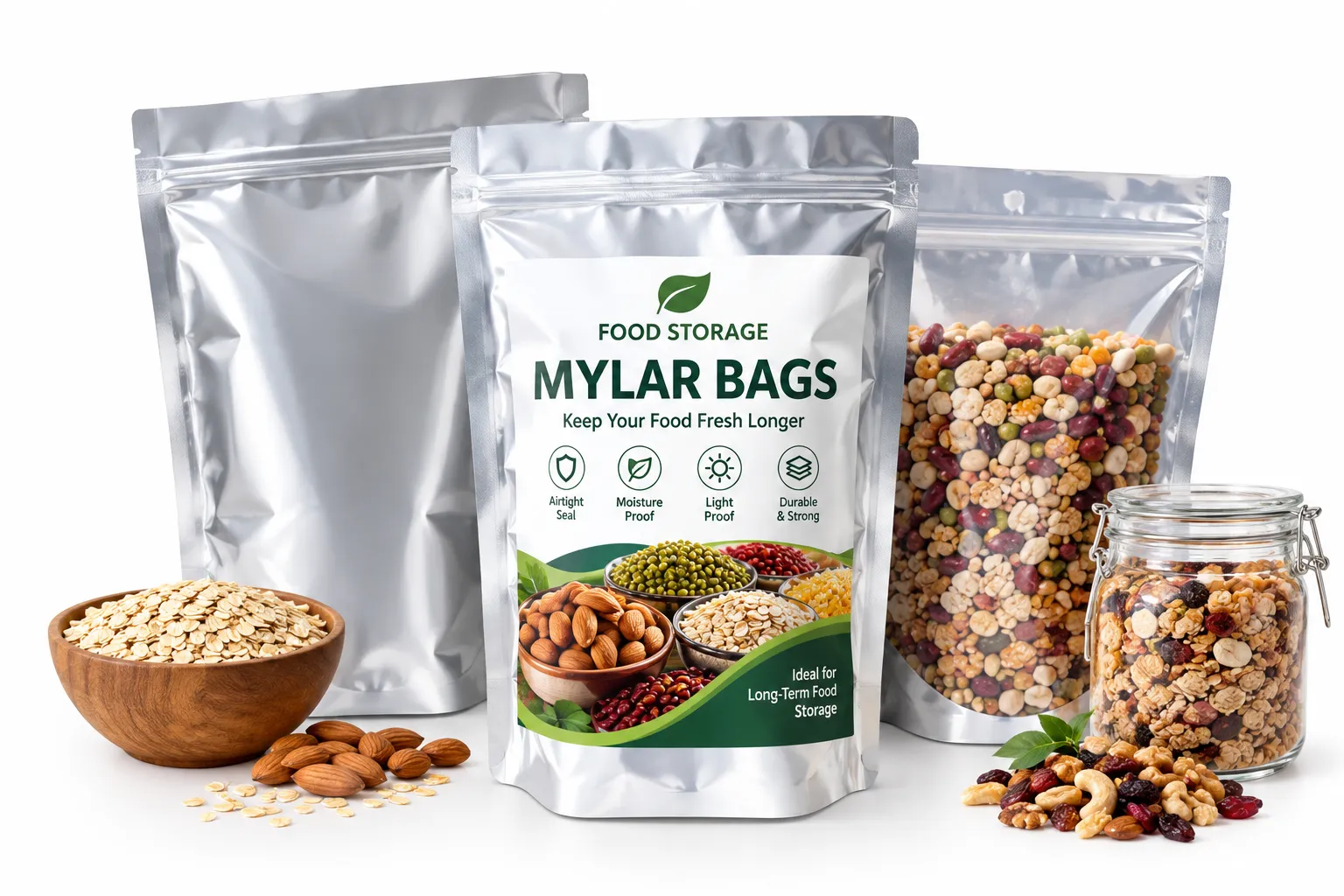
Building a pantry that lasts starts with the right packaging, and food storage mylar bags do more work than most people expect. A metallic mylar bag blocks light, moisture, and oxygen, three things that break food down long before the expiration date on the box. Rice, beans, oats, and pasta packed in plain plastic bags rarely last more than a year on a shelf. The same foods sealed in mylar with an oxygen absorber can last decades, provided you use the right thickness and seal them properly. Mylar Bags Pro works with home preppers and small pantry owners who want that shelf life without guessing at the details. This guide covers what mylar actually protects against, how to pick a thickness and size, and how to pack and seal bags so the food inside stays edible for years.
Ask yourself this: what happens to dry food once oxygen and moisture reach it? Oils in the food oxidize, insects find a way in, and moisture triggers mold. A mylar bag stops all three by creating a near-airtight barrier around the food. Add an oxygen absorber inside a sealed bag, and the packet pulls out the small amount of oxygen trapped during filling.
According to Utah State University Extension (2023), rice stored at a constant 70°F with an oxygen absorber keeps well for up to ten years. In cooler storage, the same rice sealed in an oxygen-free bag can last up to thirty years. That gap shows why both the barrier and the storage temperature matter together, not separately. Grains, legumes, and pasta respond the same way, while oily foods like brown rice or whole wheat flour still break down faster no matter how good the seal is.
Thickness gets measured in mils, and it changes both the price and the protection you get. A thin 3.5 mil bag works fine for short-term storage, but it punctures more easily and lets in slightly more light. Thicker bags in the 5 to 10 mil range hold up better against sharp grains like wheat berries and resist punctures during handling.
|
Thickness |
Typical cost (per gallon bag) |
Oxygen and light barrier |
Best for |
|
3.5 mil |
$0.20–$0.35 |
Light protection |
Short-term storage, dry snacks |
|
5 mil |
$0.35–$0.55 |
Strong barrier |
Rice, beans, pasta, most pantry staples |
|
7 mil |
$0.55–$0.80 |
Very strong barrier |
Wheat berries, sharp-edged grains |
|
10 mil |
$0.80–$1.20 |
Maximum barrier |
Long-term bulk storage, freeze-dried food |
A good seal matters as much as the bag itself. Skip a step here, and even the thickest mylar won't protect the food inside.
Bag thickness drives most of the price difference, but size and finish matter too. A gallon-size bag costs less than a 5-gallon bucket liner, though the liner holds far more food per bag. Bags with a built-in zipper cost a little more per unit, usually ten to fifteen cents extra, but they save you from re-ironing a bag you plan to open more than once.
Buying in bulk brings the per-bag price down noticeably, especially past the 100-bag mark. According to Ready.gov, the FEMA-run public preparedness site, households should keep at least a two-week supply of food on hand for emergencies. Meeting that target for a family of four takes several gallon bags of grains and legumes, so the per-bag savings from a bulk order add up fast. Oxygen absorbers add a small cost too, typically a few cents each, but skipping them shortens shelf life dramatically.
A food storage specialist we spoke with said the biggest mistake beginners make is buying bags without checking the food-grade certification. The FDA regulates food-contact packaging materials under its food-contact substance rules, and a genuine food-grade mylar bag should say so on the packaging or the supplier's product page. A bag that doesn't specify food-grade status may contain additives that aren't meant to touch food long-term.
One first-time pantry owner we heard from bought thin, uncertified bags online and skipped the oxygen absorbers entirely. By month three, the rice inside had gone soft and smelled sour, a sign moisture had gotten in through a weak seal. Suppliers that specialize in food storage mylar bags, such as Mylar Bags Pro, list the mil thickness, the certification, and the correct oxygen absorber size for each bag on the product page, which removes most of that guesswork.
A generic packaging supplier selling mylar for retail or crafts won't always test bags for long-term food contact, and their sealed-edge quality can vary between batches. A supplier that works specifically with food storage mylar bags will test seal strength and confirm the oxygen transmission rate, details a general packaging shop rarely publishes.
Getting real shelf life out of food storage mylar bags comes down to three things: the right thickness for what you're storing, the correct oxygen absorber size, and a clean, complete seal. Start small with a few gallon bags of rice or beans before committing to a bulk order, so you can test your sealing technique first. When you're ready to stock up properly, Mylar Bags Pro carries food-grade bags in several thicknesses and can help you match the right oxygen absorber size to your order.
Food storage mylar bags are made from a metallized polyester film, usually laminated with additional layers for strength and puncture resistance. The metallic layer blocks light and slows oxygen and moisture transfer, which is what gives sealed dry food its long shelf life.
Prices typically range from $0.20 per bag for thin 3.5 mil bags to $1.20 or more for thick 10 mil bags built for bulk storage. Buying in bulk, especially past 100 bags, usually brings the per-bag price down by a noticeable margin.
Yes, for most dry foods. Oxygen absorbers pull the trapped oxygen out of a sealed bag, which is what prevents oxidation, rancidity, and insect activity. Sugar and salt are the main exceptions, since oxygen absorbers can cause them to harden into a solid block.
White rice and wheat berries can last 25 to 30 years when properly sealed and stored below 70°F. Beans and pasta last 10 to 25 years, while oily foods like brown rice or whole wheat flour typically last only 1 to 2 years.
A 5 mil bag suits most beginners, since it balances cost with a strong enough barrier for grains, beans, and pasta. Move up to 7 or 10 mil only if you're storing sharp-edged grains like wheat berries or planning very long-term bulk storage.
Reuse is possible if the bag is still intact and you reseal it properly, but the oxygen barrier weakens slightly each time you open and reheat-seal it. A bag with a built-in zipper holds up better for repeated use than a bag sealed only with an iron.
The FDA regulates food-contact packaging materials under its food-contact substance rules, and genuine food-grade mylar bags meet those requirements. Always check that a supplier states the bags are food-grade before buying, since not every metallic bag on the market qualifies.
Every 18-degree Fahrenheit increase in storage temperature roughly cuts the shelf life of sealed food in half. A cool, dark space below 70°F, such as a basement or a closet away from exterior walls, gives the longest results.
Most dry grains and legumes need 300 to 500 cc of oxygen absorber per gallon bag, while a 5-gallon bucket liner typically needs 2,000 to 2,500 cc. Using too small an absorber leaves residual oxygen behind and shortens shelf life.
Yes, and freeze-dried food often stores even longer than dry staples, commonly 25 to 30 years, since freeze-drying removes nearly all moisture before sealing. Pair freeze-dried food with the correct oxygen absorber size for the bag to get the full shelf life.
Vacuum sealing removes air mechanically but doesn't block light the way metallized mylar does, and most vacuum bags aren't built for decade-long storage. Mylar bags with oxygen absorbers give a more complete barrier for food you plan to store for years rather than months.
A failed seal often shows as a bag that's gone soft or lost its rigid, vacuum-tight feel, since air has worked its way back in. Check bags every few months early on, and reseal or repack any bag that feels different from the rest of your stock