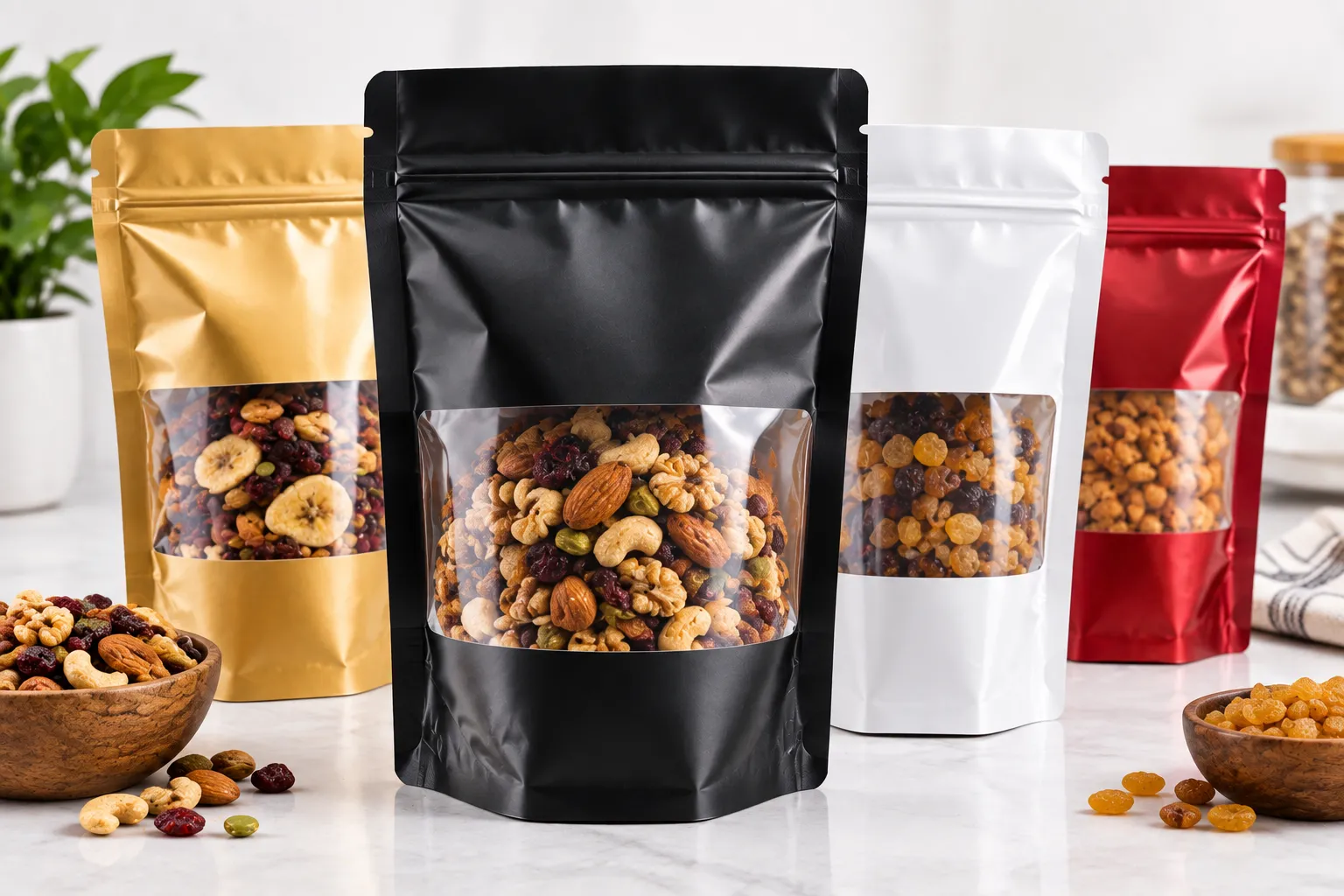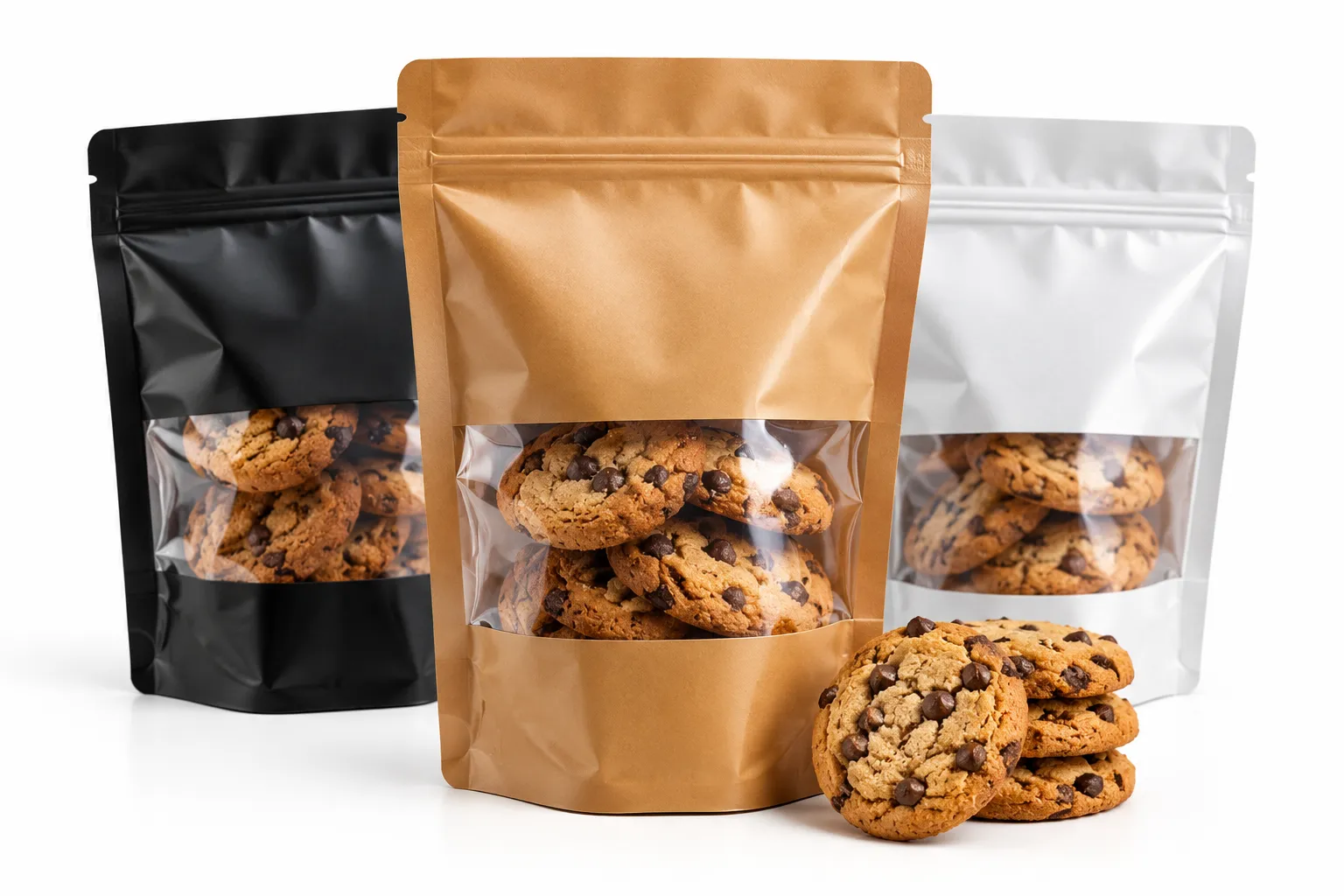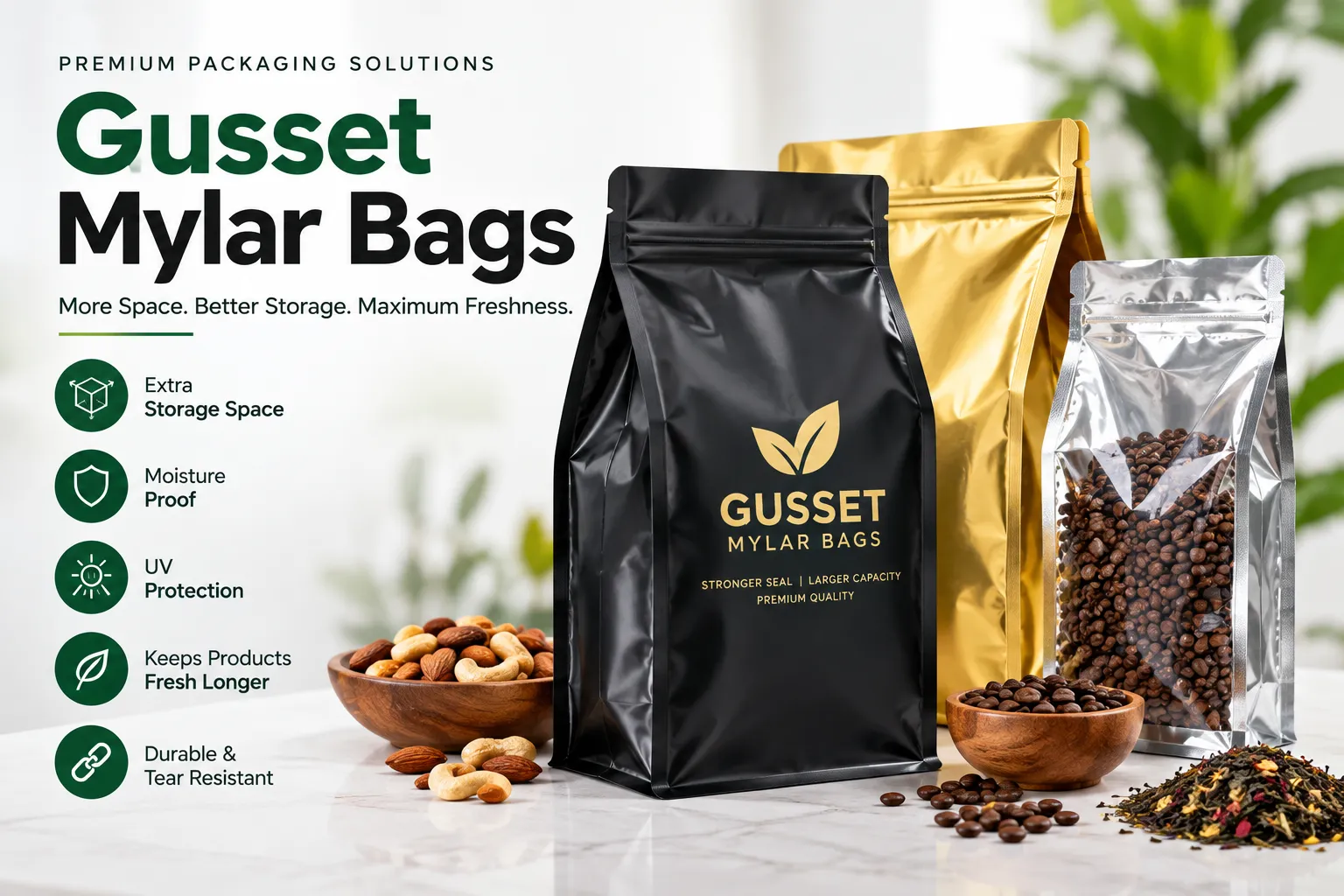
Mylar Bags Pro fields the same question from coffee roasters, supplement brands and pet food makers on a weekly basis: which gusset style actually fits their product. Gusset mylar bags solve a problem flat pouches can't handle. The folded panel at the side or base expands to hold more volume, yet the bag still packs flat for shipping. Pick the wrong gusset type, though, and a bag either wastes shelf space or won't stand upright at the register.
This guide walks through what a gusset actually does, how side, bottom and block-bottom styles compare, what a typical production order involves, and what drives the final price. Isn't it worth knowing the difference before your next print run locks in a shape you'll be stuck with for months?
A gusset is a folded panel built into the side or base of a bag that expands outward once the product fills it. Without that fold, a flat pouch can only hold as much as its two sealed panels allow, which limits both volume and shelf presence.
Side gussets fold in from each edge and work well for coffee, snacks and dry goods that need extra width without adding height. Bottom gussets fold in from the base instead, which lets the finished bag stand upright on a shelf, similar to the shape you'd recognize from a bag of pet food or roasted coffee. Pouches led the flexible packaging category with roughly 39 percent of global revenue share in 2025, according to Grand View Research (2026), and stand-up pouch formats made up close to a third of the market on their own that year.
A packaging engineer who specifies film structures for food and supplement brands described the trade-off this way: "Side gusset bags ship cheaper because they nest flat, but bottom gusset bags sell better on a shelf because they stand up and face forward." That distinction shapes almost every gusset decision a brand makes.
Each gusset style trades off differently between shelf footprint, filling capacity and how the finished bag looks once it's stocked. A brand shipping direct-to-consumer cares about different things than one competing for shelf space at a grocery chain.
| Gusset Style | Shelf Footprint | Stand-Up Stability | Best For | Typical Fill Capacity |
|---|---|---|---|---|
| Side Gusset | Compact, narrow | Low, lies flatter | Coffee, snacks, dry goods | Up to 5 lbs |
| Bottom Gusset | Larger, box-like | High, stands upright | Pet food, candy, confections | Up to 10 lbs |
| Block-Bottom | Largest, most box-like | Very high | Whole bean coffee, bulk retail | Up to 15 lbs |
| Flat Pouch (no gusset) | Minimal | None, lies flat | Single-serve, samples | Under 1 lb |
A snack brand switching from a flat pouch to a side gusset bag often gains noticeably more fill capacity without changing the printed panel size, which is why so many dry-goods brands make that switch as they scale past small-batch runs.
Ordering custom gusset mylar bags follows a fairly consistent sequence once the product and fill weight are locked in. Knowing that order helps a brand plan lead time without guessing.
Skipping the fill trial is the most common reason a first production run gets reprinted. A gusset that folds cleanly empty can crease unevenly once a dense product like whole bean coffee fills it.
Price depends on film structure, gusset style, print complexity and order volume. A basic side gusset bag in a single-color print costs far less than a bottom gusset bag with a full-color wraparound design and a degassing valve for coffee.
Order volume shifts the math a great deal. A run of 25,000 bags typically costs 30 to 40 percent less per unit than a run of 2,500, since plate setup and film tooling costs spread across a larger batch. Many brands start with a smaller trial run to test their fill line before committing to a full production quantity.
Film choice adds its own cost layer. Foil-laminate structures that block light and moisture cost more per unit than standard metallized film, though that extra barrier pays off for products like ground coffee or supplements that lose potency quickly once exposed to air.
A general packaging vendor can produce a bag that folds correctly, but food-contact packaging carries requirements under FDA rules for materials that touch consumable products, which a generalist supplier doesn't always track closely. Suppliers who work only on flexible pouch formats, such as Mylar Bags Pro, tend to catch fill-weight and seal-strength issues before a print run ships rather than after a customer complains.
The clearest sign of a specialist supplier is whether they ask about your fill weight, product density and packaging line type before quoting a price. A supplier who understands the difference between a hand-fill operation and an automated vertical form-fill-seal line will recommend the right gusset style and film gauge from the start, instead of leaving that mismatch for you to find during your first production run.
If you want a supplier who understands both the structural side and the branding side of custom flexible pouches, Mylar Bags Pro offers a sample proof before any production commitment. That step tends to save far more time than reworking a design after a batch of bags arrives.
Side gusset bags fold in from the edges and lie flatter, suiting coffee and snacks. Bottom gusset bags fold in from the base and stand upright, suiting pet food and confections that benefit from shelf presence.
Pricing typically starts around $0.20 to $0.35 per bag for basic side gusset styles and rises toward $0.60 or more for bottom gusset bags with full-color print and a degassing valve.
Coffee, snacks, dry goods, pet food, candy and supplements are the most common uses, since the gusset gives each of these enough fill volume without oversizing the printed panel.
Food-grade gusset bags use films and inks that meet FDA requirements for materials in direct contact with food, so confirm your supplier specifies food-contact-grade film before ordering.
Most suppliers offer trial runs starting around 1,000 to 2,500 units, with per-unit pricing improving noticeably at 10,000 units and above.
Yes, most side and bottom gusset styles support a resealable zipper closure, which is common for coffee, snacks and pet food that customers reopen repeatedly.
Most orders take 3 to 5 weeks from proof approval to delivery, with longer timelines for bottom gusset styles that need additional tooling for the base seal.
Whole bean and freshly roasted coffee typically need a one-way degassing valve to release carbon dioxide without letting air back in, which extends shelf freshness noticeably.
Most gusset bags use film between 3 and 5 mil for standard products, moving up to 5 to 7 mil for heavier fills or products needing a stronger moisture barrier.
Some mono-material laminates are designed for recyclability, though standard metallized or foil-laminate structures often are not accepted through curbside recycling programs.
No. A block-bottom bag has a fully square base built for maximum stand-up stability and shelf display. A standard bottom gusset creates a smaller expandable base with less volume.
Shelf life depends on the film barrier and product type, but foil-laminate gusset bags commonly extend shelf life for dry goods and coffee well beyond what a basic poly bag provides.
Choosing the right gusset style comes down to matching fill weight and product density to a bag shape, confirming film barrier needs before the print run, and working with a supplier who tests fill performance rather than guessing at it. A rushed order without a fill trial tends to cost more in reprints than it saves upfront. Mylar Bags Pro can walk you through gusset styles, film options and realistic lead times for your next production run. Reach out for a sample proof before you commit to a full batch.