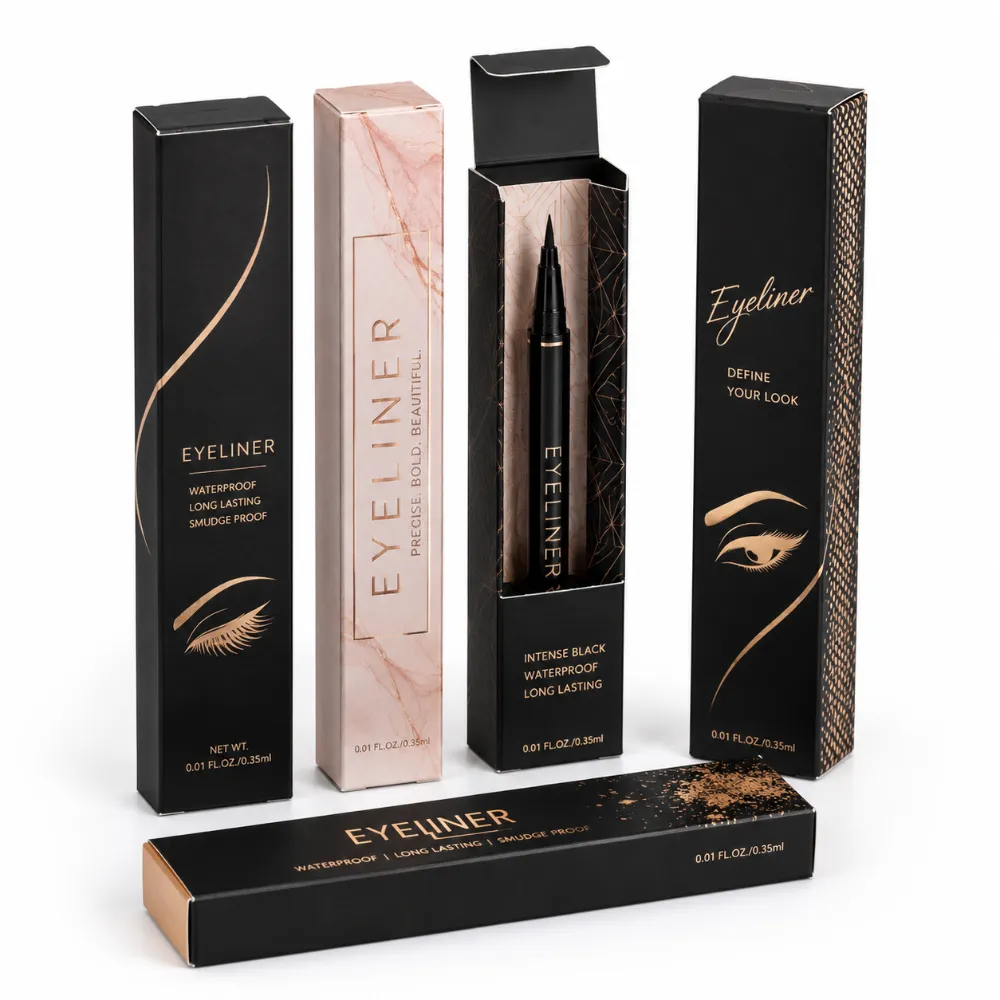
An eyeliner pencil is small, but the box around it does a lot of work. Mylar Bags Pro sees brands make the same mistake often: they spend months perfecting the formula, then grab whatever stock box their supplier offers without a second thought. Custom eyeliner boxes are one of the cheapest ways to raise a product's shelf presence, and skipping that step leaves money on the table.
Beauty buyers make snap judgments. A dented flap or a flimsy tray tells a shopper the product inside might be just as forgettable. A well-built custom eyeliner box does the opposite. It protects a fragile pencil or pen during shipping and gives the brand a chance to say something about itself before the customer even opens it.
This guide covers the materials worth considering, what actually happens during production, the costs to budget for, and how to pick a packaging partner who won't cut corners on fit or print quality.
Eyeliner pencils and pens are thin, often fragile, and easy to damage in transit. A box built for this product needs a snug internal fit, whether that comes from a foam insert, a cardboard tray, or a molded slot cut into the box itself. Loose packaging means a cracked tip arrives at the customer's door.
Buyers also expect the box to reflect the brand's positioning. A luxury liner brand needs a box that feels substantial in hand, maybe with a magnetic closure or foil stamping. A budget or drugstore-tier brand can lean on simpler tuck-end boxes without losing much shelf appeal.
According to Fortune Business Insights (2025), the U.S. cosmetic packaging market is expected to reach $15.54 billion by 2032, driven largely by demand for premium and more distinctive packaging within the beauty category. Custom eyeliner boxes sit squarely inside that trend, since eye makeup remains one of the most frequently repurchased categories in cosmetics.
Picking a box style comes down to product size, budget, and how much shelf theater the brand wants to create. Here's how the common options stack up against each other.
|
Box Type |
Avg. Cost per Unit |
Print Quality |
Best For |
Structural Strength |
|
Tuck-end cardboard |
$0.15–$0.30 |
Good |
Budget and mid-tier lines |
Moderate |
|
Rigid box with insert |
$0.60–$1.20 |
Excellent |
Premium and gift sets |
High |
|
Mylar-lined sleeve |
$0.20–$0.40 |
Very good |
Limited runs, seasonal drops |
Moderate |
|
Kraft eco box |
$0.18–$0.35 |
Good, matte finish only |
Clean-beauty and natural brands |
Moderate |
Rigid boxes cost more, but they hold their shape after repeated opening, which matters for a product a customer reaches for daily. Tuck-end cardboard stays the go-to for brands running larger volumes on tighter margins. Kraft stock has become popular with clean-beauty labels chasing a natural look, though it limits how vivid the printed colors can appear.
Production for a custom eyeliner box follows a fairly fixed sequence, and rushing any step usually shows up as a fit problem later. The brand starts by sending exact pencil or pen dimensions, including cap width and total length, since even a two-millimeter mismatch can leave the product rattling inside.
The supplier then builds a die-line, which is the flat template that folds into the finished box shape. Once approved, a physical sample gets produced so the brand can test the fit with an actual unit, not just a mockup on screen. After sign-off, the print files go through color matching to make sure the final run matches the approved proof.
Full production runs next, usually with a quality check pulled every few hundred units to catch print misalignment or box-scoring issues before the whole batch ships. Brands who skip the physical sample step are the ones who end up with boxes that look right but don't close properly around the actual product.
Material choice sets the baseline, but a few other decisions swing the price more than people expect. Order volume matters most here too: a 10,000-unit run brings the per-box cost down sharply compared to a 1,000-unit test batch. Foil stamping, embossing, or spot UV coating each add a separate line to the quote.
Insert complexity plays a role as well. A simple cardboard tray costs far less than a molded foam insert cut to match the exact shape of the pencil. Rush production, meaning a turnaround under two weeks, typically adds a premium of 15% to 25% on top of standard pricing.
A packaging consultant we spoke with framed it this way: "Most brands overspend on finishes before they've locked the insert design, and that's backwards. Get the fit right first, because a box that doesn't protect the product isn't saving money no matter how cheap it looks on paper." That advice holds for any first-time custom order.
Not every box supplier handles small, oddly shaped cosmetic items well. A vendor used to printing large skincare cartons might not have the die-cutting precision a slim eyeliner tube demands. Ask about their minimum order quantity, their sample turnaround, and whether they've handled cosmetic-specific FDA labeling requirements for ingredient panels.
Picture a brand that ordered rigid boxes from a general packaging vendor, only to find the magnetic closure wouldn't sit flush once the foam insert was added. A supplier experienced with cosmetics would have caught that clearance issue during the sample stage. Companies like Mylar Bags Pro that work specifically with custom eyeliner boxes and similar cosmetic items tend to flag fit problems like this before a full production run gets locked in, which saves both time and reprint costs.
Ask any potential partner for a physical sample before committing to volume. A box that photographs well but doesn't close right around the actual product will cost more to fix later than it would have cost to test upfront.
Most custom eyeliner boxes use folding cardboard, rigid chipboard, or mylar-lined sleeves. The choice depends on the brand's budget, the fragility of the product, and how premium the box needs to feel on a shelf.
Costs typically range from $0.15 for basic tuck-end cardboard to $1.20 for rigid boxes with a custom insert. Print finishes like foil stamping or spot UV add extra cost on top of the base material.
Minimum orders usually start around 500 to 1,000 units for custom-printed boxes, though some suppliers offer smaller test runs at a higher per-unit price. Larger volumes bring the per-box cost down considerably.
Cosmetic packaging sold in the United States needs to follow FDA labeling rules for ingredient lists and net contents under the Fair Packaging and Labeling Act. Brands should confirm their box design leaves room for required label information.
Standard production usually takes three to five weeks from approved sample to delivery, depending on order size and finish complexity. Rush orders can cut that timeline but often come with an added fee.
A die-cut cardboard tray works well for most standard pencils, while molded foam suits premium lines or oddly shaped pens. The insert should hold the product snug enough that it doesn't shift during shipping.
Kraft paperboard and recycled cardboard are common eco-friendly choices for eyeliner packaging. These materials print well in matte finishes, though they don't achieve the same vibrant color range as coated stock.
For a brand competing on retail shelves or through subscription boxes, custom packaging often pays for itself through better perceived value and fewer damaged returns. A small test run keeps costs manageable while the brand builds sales history.
Long-distance shipping and humid climates call for sturdier board stock and tighter inserts to prevent warping or product shifting in transit. Brands shipping internationally should ask their supplier about moisture-resistant coating options.
Offset printing gives the sharpest results for large runs, while digital printing suits smaller batches or frequent design changes. Foil stamping and embossing add texture but work best on rigid or coated stock rather than thin cardboard.
Send precise measurements of the pencil or pen, including cap width, to your supplier before the die-line gets built. Always request a physical sample and test it with the actual product before approving a full production run.
The EU Cosmetics Regulation requires specific labeling on primary and secondary packaging, including ingredient lists and batch codes. Brands selling into the UK and EU should confirm their box design accounts for these requirements before printing.
Getting custom eyeliner boxes right comes down to matching the box style, the insert, and the finish to what the product actually needs. A snug fit and a clean print do more for a brand's shelf presence than an expensive finish ever will on its own. Brands ready to move past generic stock boxes can reach out to Mylar Bags Pro to talk through insert options and request a sample before committing to a full order