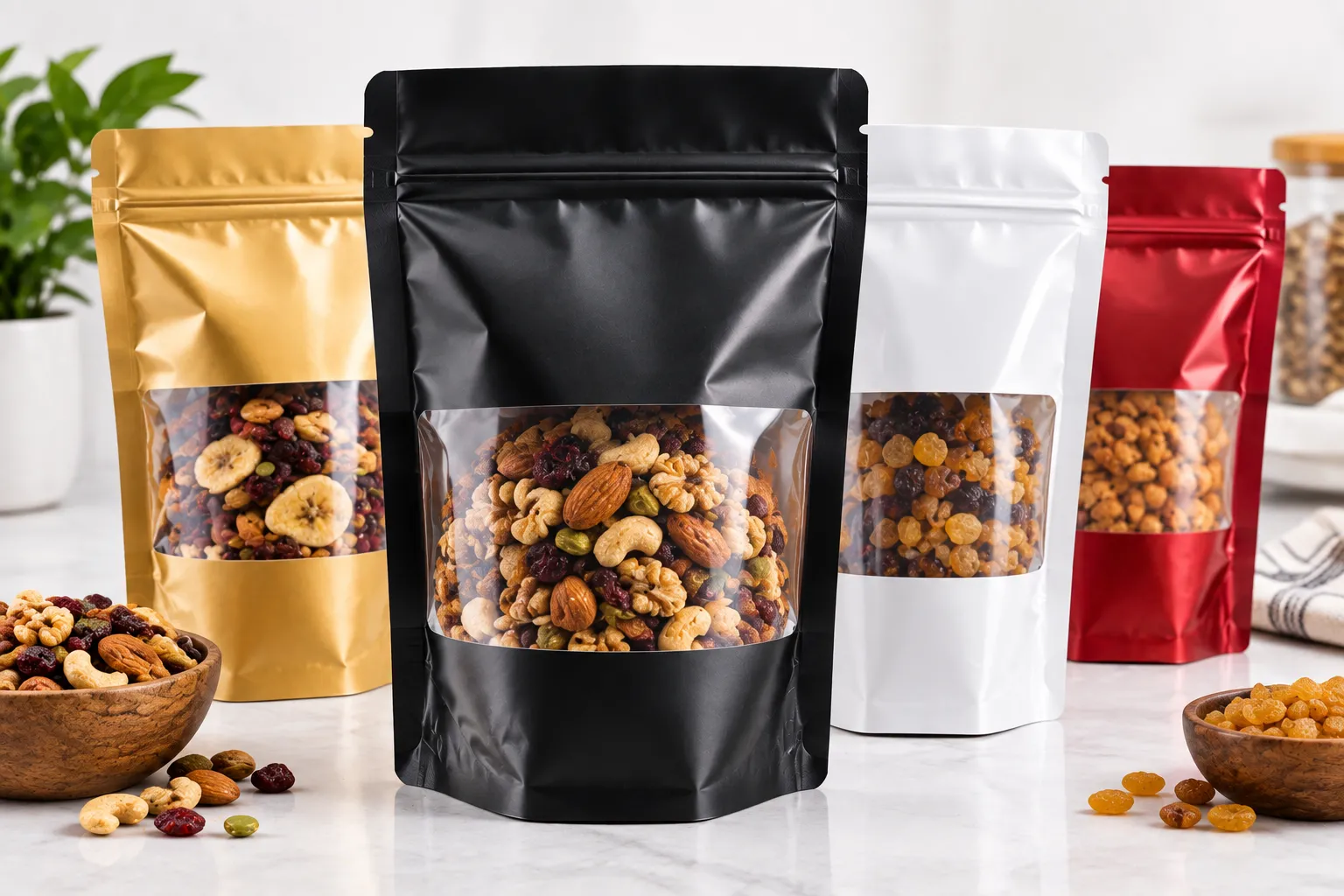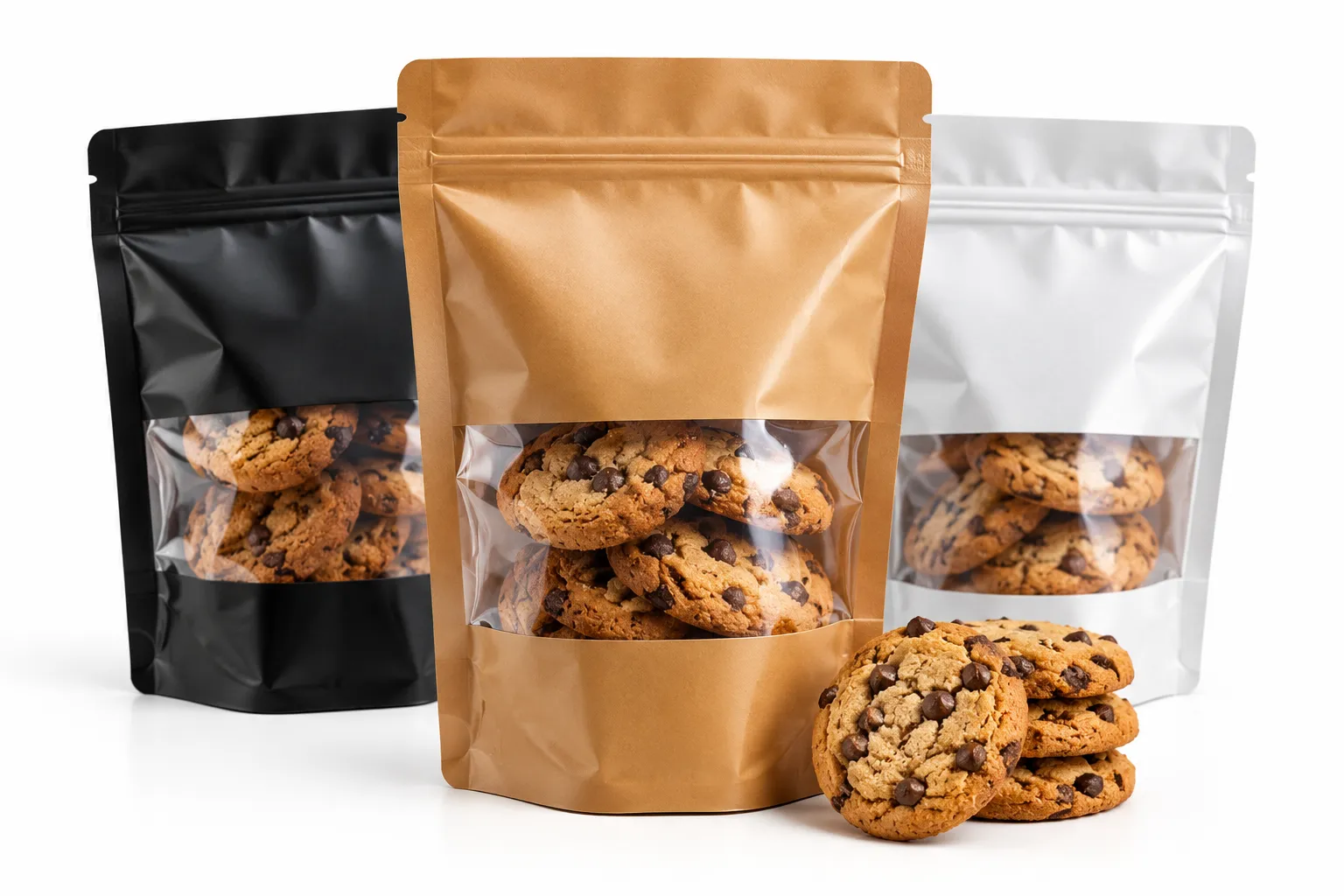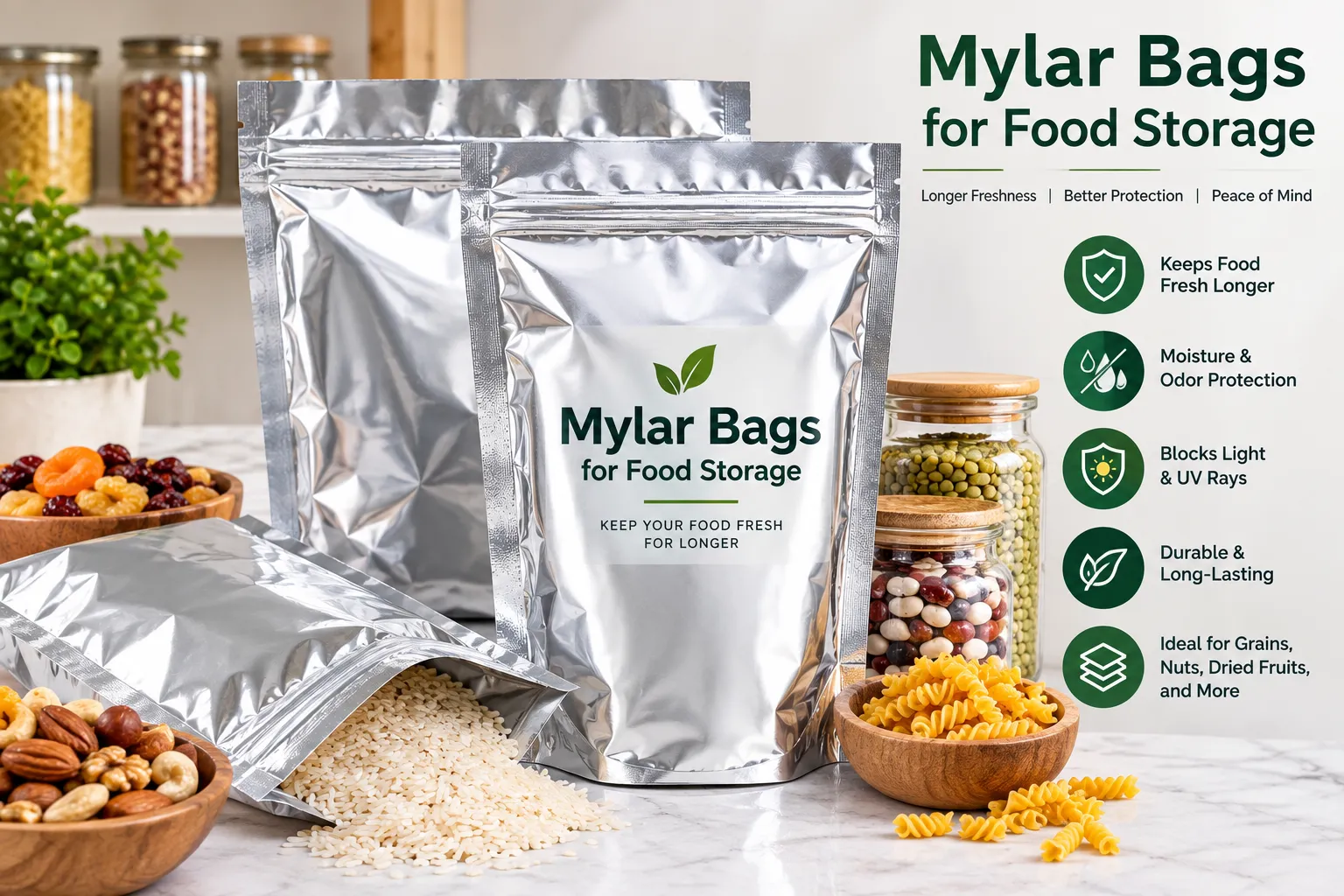
Packagly hears from home preppers, food co-ops and small pantries on a regular basis, and the same question comes up almost every time: does mylar actually work as well as people claim for long-term storage. Mylar bags for food storage block the three things that ruin dry staples over time: light, moisture and oxygen. Paired with an oxygen absorber, dry rice or beans that would spoil within a couple of years in a paper bag can stay edible for decades in a properly sealed mylar bag.
This guide covers how mylar bags actually protect food, which thickness and size to pick, how to pack and seal a bag correctly, and what drives the cost of building out a pantry. Wouldn't it help to know the difference between a bag that lasts and one that fails after a year?
Mylar is a polyester film, usually bonded to a thin layer of aluminum, which makes it close to impermeable to light and oxygen. Standard plastic bags and paper packaging let both through slowly, which is why dry goods stored that way lose flavor and nutrients far faster.
Oxygen absorbers do the rest of the work once a bag is sealed. These small packets pull residual oxygen down to well under 1 percent inside the bag, which stops mold growth and halts the insect activity that ruins grain stored in ordinary containers. A food storage specialist who trains community preparedness groups put it plainly: "Most storage failures come down to an undersized oxygen absorber, not a bad bag." Getting the absorber size right matters as much as the mylar itself.
Temperature plays a bigger role than most people expect. Each 10-degree Fahrenheit increase in storage temperature roughly cuts shelf life in half, according to USDA-cited research on grain storage. A cool, dark closet will always outperform a warm garage for long-term food storage, no matter how thick the bag is.
Bag thickness, measured in mil, determines how well a bag resists punctures and how long it holds its seal over years of storage. Bag size should match how quickly a household works through a given food, since opening a large bag exposes the remaining contents to air.
| Thickness | Puncture Resistance | Typical Use | Bag Size Range | Shelf Life (dry staples) |
|---|---|---|---|---|
| 3 mil | Low to moderate | Small pantry portions | Quart to 1-gallon | 5-10 years |
| 4-5 mil | Moderate to high | Standard household storage | 1-gallon to 5-gallon | 15-25 years |
| 6-7 mil | High | Bulk bucket liners | 5-gallon to 6-gallon | 20-30 years |
| Write-on Mylar | Moderate | Labeled rotating stock | Various | Matches base thickness |
Households building a full pantry usually settle on 5-mil mylar bags for food storage, since that thickness holds up to years of handling without adding much cost over thinner options.
Packing food into mylar bags follows a consistent process once you have the right supplies gathered. Rushing the sealing step is where most people run into trouble later.
Skipping the headspace step causes more failed seals than any other mistake. Leave enough room for the heat sealer to form a clean, even line.
Price depends on bag thickness, bag size, and how many oxygen absorbers a full pantry setup requires. A basic 4-mil quart bag costs only a few cents. A thicker 7-mil, 5-gallon bucket liner with a matching 2,000 cc absorber runs closer to a dollar or two per unit.
Buying in bulk changes the math considerably. A 50-bag kit with matching oxygen absorbers typically costs less per unit than buying bags and absorbers separately in small batches, since packaging and shipping costs spread across the larger order. Many households start with a modest kit for a few staples before scaling up to a full year's supply.
Food choice affects cost too, though not in an obvious way. Sugar and salt need no oxygen absorber at all, which trims cost per bag. Nuts and other higher-fat foods often need larger absorbers and shorter rotation cycles to avoid rancidity.
A generic plastic bag supplier can sell you something that looks like mylar, but food-grade film needs to meet specific barrier and food-contact standards that a bargain bag often skips. Suppliers who focus on food-grade packaging, such as Packagly, tend to specify the actual mil thickness and aluminum layer quality rather than leaving buyers to guess from a vague listing.
The clearest sign of a reliable supplier is whether they list bag thickness, size and food-contact compliance clearly on every product, rather than burying that detail in fine print. A supplier who understands the difference between a bag rated for short-term snack packaging and one built for a 20-year pantry reserve will steer buyers toward the right thickness from the start, instead of leaving that mismatch to surface years later when a seal fails.
If you want food-grade mylar bags built for long-term storage, Packagly stocks a range of thicknesses and sizes with clear specifications for each. Building out a pantry a little at a time, starting with the staples your household actually eats, tends to work better than buying everything at once.
Dry staples like rice, beans and wheat can last 20 to 30 years when sealed correctly with an oxygen absorber, stored in a cool, dark, low-humidity space.
Foods with more than about 10 percent moisture, along with fresh produce, dairy and high-fat items, spoil or turn rancid even in a sealed mylar bag. Stick to dry, low-moisture staples.
Most dry staples need one, but sugar should never be packed with an oxygen absorber since it hardens into a solid block. Salt doesn't need one either.
Most households use 4 to 5 mil mylar bags for everyday pantry staples and move up to 6 or 7 mil for bulk bucket liners meant to last two decades or more.
Basic bags run only a few cents each in bulk. Thicker bucket liners with a matching large oxygen absorber can cost one to two dollars per unit.
Once a bag is opened and the oxygen absorber exposed to air, both lose their protective effect. Reuse the bag for short-term storage only, without expecting long-term shelf life.
A standard clothes iron on a low setting works for smaller bags, though an impulse sealer gives a more consistent, reliable seal for larger or thicker bags.
No. Mylar resists insects and moisture well, but rodents can chew through it. Store sealed bags inside a hard-sided container like a food-grade bucket for full protection.
Most 1-gallon bags need a 300 to 500 cc oxygen absorber for dense foods like grains, though the exact size depends on how tightly packed the bag is.
Food-grade mylar bags meet food-contact material standards, so confirm your supplier specifies food-grade film rather than a general-purpose barrier bag.
Keep bags below 70°F, away from direct light, and in a low-humidity space. Every 10-degree increase in temperature roughly cuts shelf life in half.
Standard mylar doesn't take pen well, so use masking tape and a permanent marker, or choose write-on mylar bags designed for direct labeling.
Building a reliable food storage system comes down to matching bag thickness to how long you plan to store each item, sizing oxygen absorbers correctly, and keeping everything in a cool, dark space once sealed. A rushed seal or an undersized absorber tends to shorten shelf life far more than most people expect. Packagly can walk you through thickness options, bulk kits and food-grade specifications for your next pantry order. Reach out for guidance before you commit to a full year's supply.