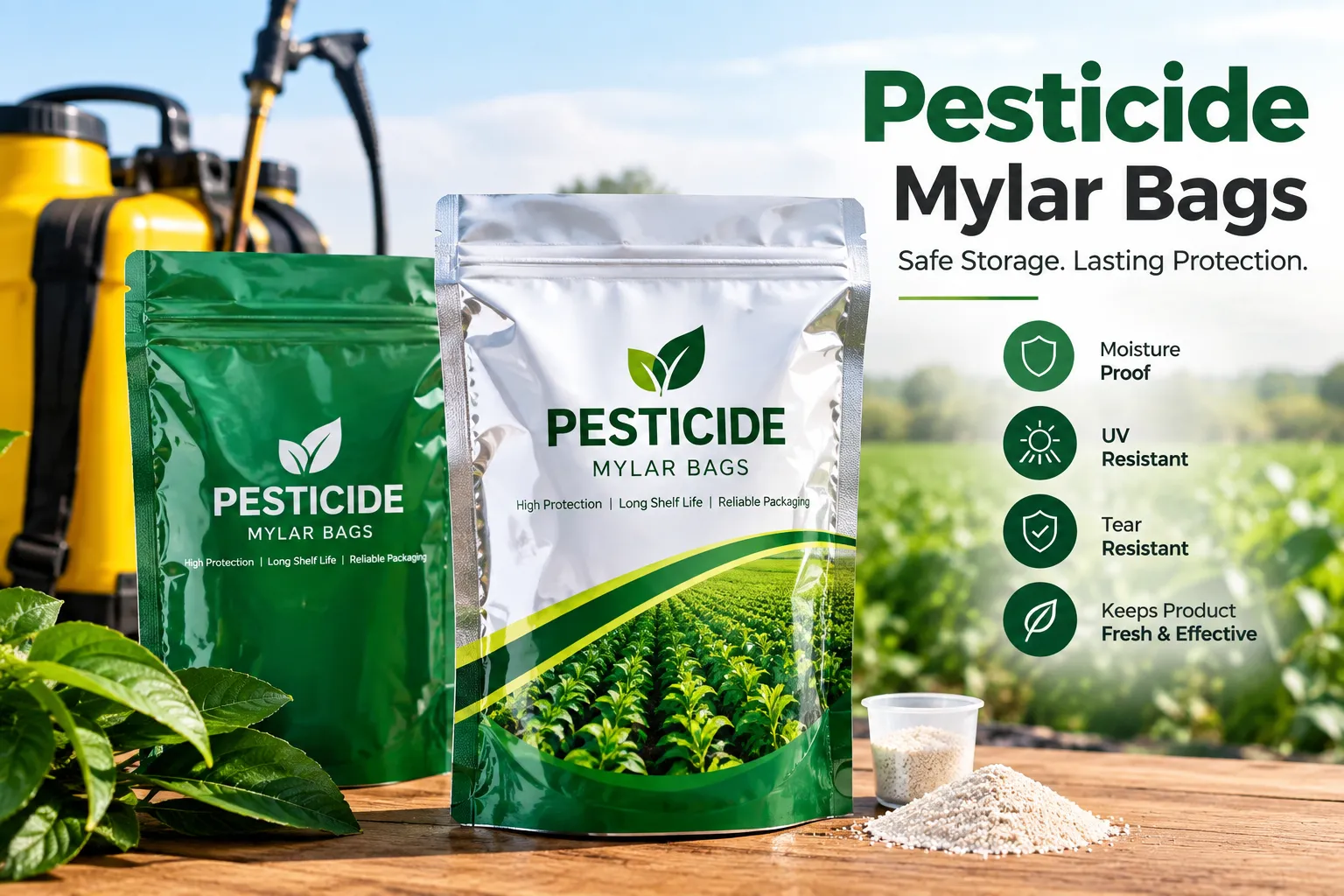
Mylar Bags Pro hears from pesticide formulators and retailers on a regular basis, and the same concern comes up in almost every conversation: powders and granules break down fast once moisture or light gets in. Pesticide mylar bags solve that problem with a foil or metallized barrier that keeps active ingredients stable from the warehouse to the field. Get the barrier grade wrong, though, and a product can clump, lose potency, or fail a shelf-life test before it ever reaches a customer.
This guide covers what a proper pesticide mylar bag needs to include, how the common barrier options compare, what actually drives the price, and how EPA labeling rules shape the design. Doesn't it make sense to get this right before a full production run ships?
A mylar bag is built from layered film, usually a polyester outer layer bonded to a metallized or foil core, which blocks moisture, oxygen, and UV light far better than plain plastic. For granular and powder pesticides, that barrier keeps active ingredients from breaking down during storage or transit.
Beyond the barrier itself, the bag has to carry required label information under 40 CFR Part 156: the EPA registration number, storage and disposal instructions, and the signal word that matches the product's toxicity category. Products packaged in containers of 20 fluid ounces or less that are labeled for residential use often need child-resistant closures under 40 CFR Part 157, so the bag's seal design matters as much as the film itself.
A packaging compliance specialist who works with agricultural formulators described the pattern this way: "Most rejected label proofs come down to storage and disposal statements that don't match the container type, not the barrier film." That gap catches smaller manufacturers more often than large ones with in-house compliance teams.
Barrier strength depends on film thickness and layer construction, and the right grade depends on how sensitive the active ingredient is to moisture, oxygen, and light. A granular herbicide stored short-term needs less protection than a concentrated powder meant to sit in a warehouse for a year.
|
Barrier Grade |
Typical Thickness |
Moisture/Oxygen Protection |
Best For |
Shelf Stability |
|
Standard Metallized |
3-5 mil |
Moderate |
Short-term storage, low-sensitivity granules |
6-12 months |
|
High-Barrier Foil |
5-7 mil |
High |
Concentrated powders, long transit routes |
12-24 months |
|
CR-Zippered Foil |
6-8 mil |
High, with resealable lock |
Residential products under 20 fl oz |
12-24 months |
|
Bulk Gusseted Foil |
7-9 mil |
Very high, load-bearing |
Large-volume agricultural granules |
24+ months |
Formulators shipping product across multiple climate zones tend to move up to high-barrier foil, since pesticide mylar bags rated for a dry warehouse can underperform once they travel through humid transit conditions.
Producing a batch of foil storage bags follows a set sequence once the formulation and label content are finalized. Knowing the order helps a formulator plan lead time realistically.
Skipping the fill trial is where most first-time orders run into trouble. A seal that looks fine empty can fail once loaded with a dense granular product.
Price depends on film thickness, bag size, print complexity, and whether a certified child-resistant closure is required. A basic gusseted bag for bulk agricultural product costs far less per unit than a smaller, printed retail pouch with a zippered CR closure.
Order volume changes the math substantially. A run of 10,000 bags typically costs 25 to 35 percent less per unit than a run of 1,000, since film tooling and print setup costs spread across more units. Many formulators start with a smaller trial batch before committing to a full production run.
Compliance features add real cost. A CR-certified zipper closure with lab testing can add a noticeable premium per thousand units compared to a standard heat-seal, though that cost keeps the product eligible for residential retail sale where CR packaging is required by law.
A general packaging vendor can produce a bag that holds product, but pesticide packaging carries labeling rules under FIFRA that a generalist supplier rarely tracks in detail. Suppliers who work only on regulated agricultural and pest-control packaging, such as Mylar Bags Pro, tend to catch label gaps before a print run ships.
The clearest sign of a specialist supplier is whether they ask about the active ingredient's toxicity category and the intended sale channel before quoting a price. A supplier who understands the difference between bulk agricultural packaging and small residential containers under 20 fluid ounces will design the closure correctly from the start, instead of leaving CR testing as a late-stage surprise.
If you want a supplier who understands both the barrier science and the EPA labeling side of this category, Mylar Bags Pro offers a proof review before any production commitment. That step tends to catch label issues long before they become a compliance problem at retail.
High-barrier foil laminate, typically 5 to 7 mil thick, protects concentrated powders and granules best during long storage or transit. Standard metallized film suits shorter-term, lower-sensitivity products.
Pricing usually starts around $0.15 to $0.30 per bag for basic gusseted bulk bags and rises toward $0.50 or more for small printed retail pouches with a certified CR zipper.
Not all of them. Products in containers of 20 fluid ounces or less labeled for residential use usually need CR closures under 40 CFR Part 157. Bulk agricultural containers often do not.
Labels need the EPA registration number, the signal word matching the toxicity category, storage and disposal instructions, and net contents, per 40 CFR Part 156.
Shelf stability ranges from 6 to 12 months in standard metallized bags up to 24 months or more in high-barrier foil, depending on the active ingredient's sensitivity.
Yes, most bags support flexo or digital print for branding, provided the required warning text and registration number stay legible and at the mandated minimum size.
A service container is used by an applicator during a job and usually doesn't need product labeling. A retail bag sold to a customer must carry full EPA-required labeling.
Follow the storage and disposal statement on the label, which usually calls for triple rinsing if applicable, then puncturing the bag before disposal to prevent reuse.
Bulk gusseted bags typically range from 25 to 50 pounds capacity for agricultural granules, though larger formats are available for high-volume operations.
Some foil-laminate bags are accepted by programs like the Ag Container Recycling Council once cleaned per label instructions, though acceptance varies by material and local program.
Yes, most state and federal rules require warning text at a set minimum height so it stays legible on the finished bag, and decorative fonts that shrink this text can trigger a label rejection.
Check the container size and intended sale channel against 40 CFR Part 157. Products under 20 fluid ounces marketed for residential use almost always require certified CR closures.
Choosing the right pesticide storage bag comes down to matching barrier strength to the active ingredient, confirming closure requirements before the print run, and working with a supplier who treats labeling as carefully as the film itself. A rushed order without a fill trial or a label review tends to cost more in reprints than it saves upfront. Mylar Bags Pro can walk you through barrier grades, closure options, and realistic lead times for your next production run. Reach out for a proof review before you commit to a full batch