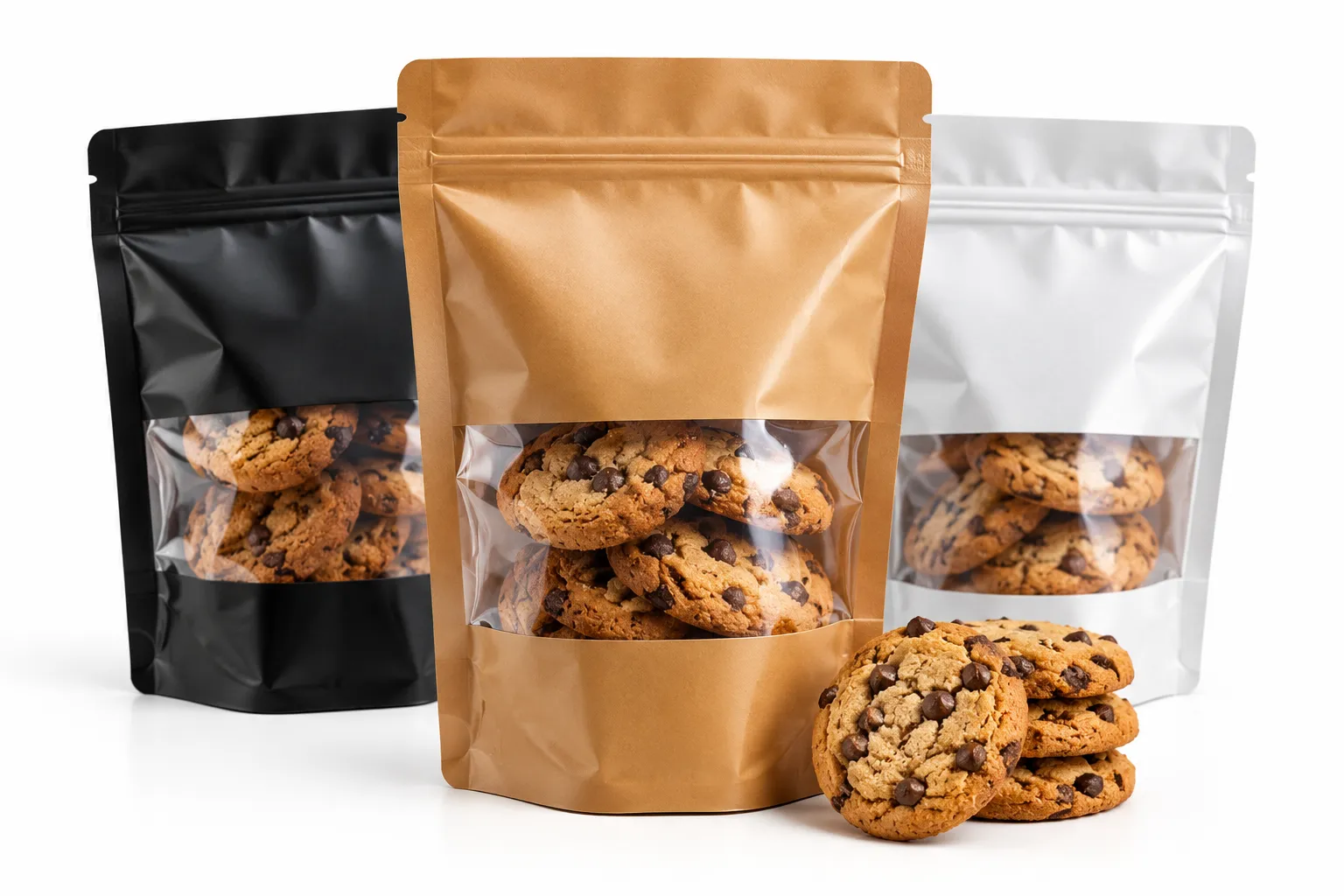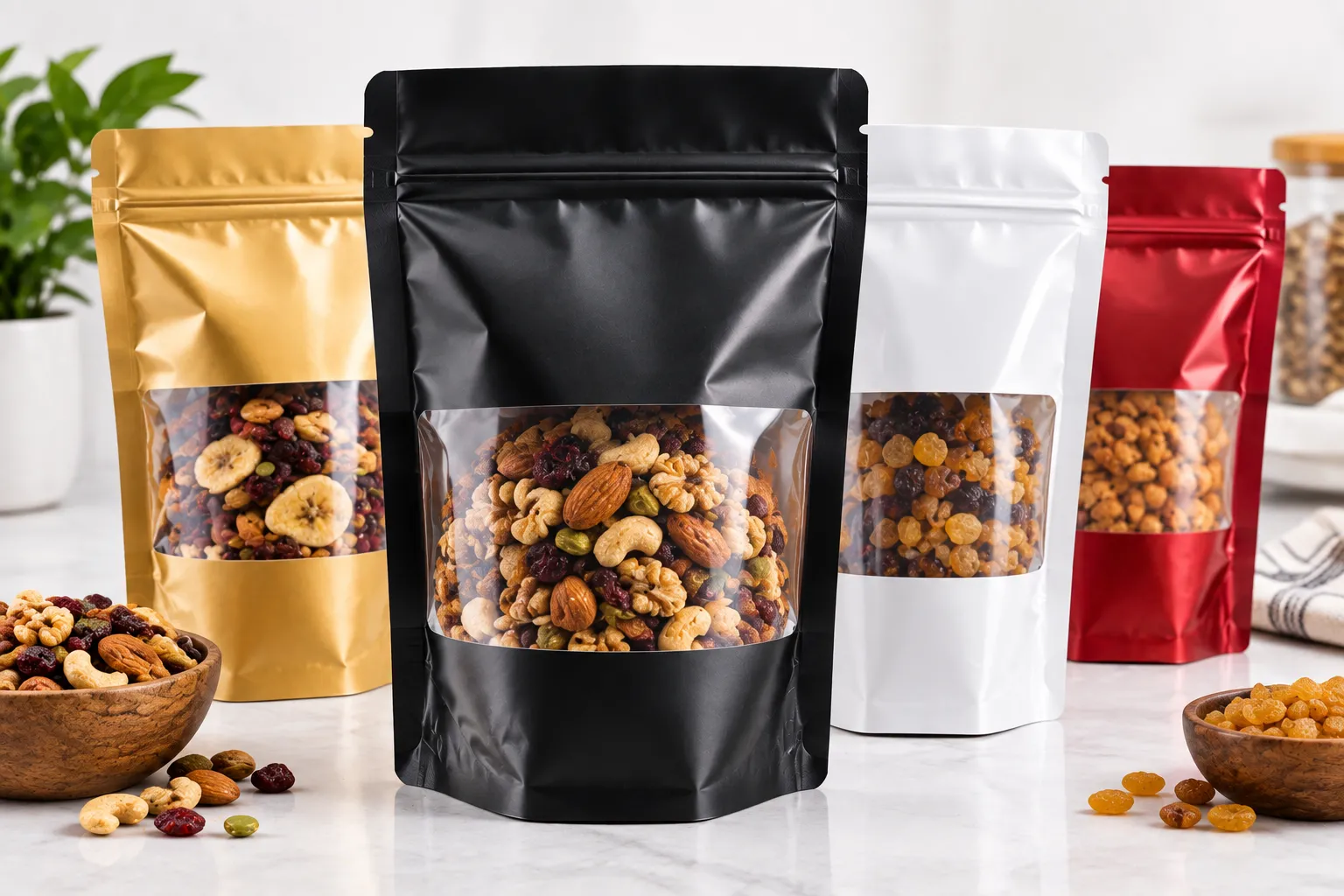
Shoppers decide fast. A shopper standing in front of a shelf full of similar products often makes a choice within seconds, and packaging plays a bigger part in that decision than most brands realize. Window mylar bags give retail products an edge by combining a strong protective barrier with a clear panel that lets the product speak for itself. Mylar Bags Pro works with food brands and retail packaging buyers who want that visual appeal without giving up shelf life or freshness.
A bag of granola, roasted coffee beans, or artisan pasta looks more trustworthy when a customer can actually see it. Window mylar bags solve a problem that fully opaque packaging can't: they build confidence at the exact moment a buying decision happens. For small brands trying to stand out next to bigger competitors, that visibility often makes the difference between a sale and a passed-over shelf.
A clear window does more than look nice. It answers questions a customer would otherwise have to guess at, like portion size, texture, and color. Does the granola look chunky and fresh? Are the coffee beans a rich, even roast? A window mylar bag settles those questions before the customer picks up the package.
Research backs this up. A Mintel report on food packaging trends found that 54% of shoppers rate product visibility as an important factor in their purchase decisions, and 30% judge freshness based on appearance rather than the printed date. Window mylar bags give brands a direct way to meet both expectations at once.
Studies on transparent packaging design also point to a sweet spot. Research on rice packaging with clear windows found that exposing roughly 25% to 50% of the product through the window increased purchase intention, while windows much larger than that started to reduce the overall visual appeal of the package. That balance guides how most window mylar bags get designed today, across the US, UK, Canada, and beyond.
Not every window style suits every product. A bag holding oily nuts needs a different barrier setup than one holding dry pasta or delicate freeze-dried fruit, since fat content changes how fast a product goes rancid near light exposure.
Die-cut windows cut a clean shape directly into the front panel and seal a clear film over the opening. Full-front clear panels use a transparent film for most of the bag, with printed graphics limited to a border or back panel. Some brands choose a frosted or tinted window instead, which reduces light exposure while still showing product shape and color.
|
Window Style |
Barrier Level |
Best For |
Reseal Option |
Maintenance |
|
Die-cut window |
High |
Snacks, granola, dried fruit |
Zipper or heat seal |
Keep window area free of grease buildup |
|
Full-front clear panel |
Medium-high |
Coffee, pasta, bakery items |
Zipper closure |
Store away from direct sunlight |
|
Frosted or tinted window |
High |
Light-sensitive products |
Heat seal or zipper |
Wipe clean, avoid scratching the film |
|
Foil-back with small window |
Very high |
Long shelf-life dry goods |
Zipper closure |
Fold carefully to protect the seal |
A small coffee roaster in Ontario ran into this exact issue when switching from a fully printed bag to a window mylar bag. Sales on the shelf picked up once customers could see the bean color and roast level before buying, without any change to the roast itself.
Building a window mylar bag starts with laminating a barrier film, usually a mix of polyester, foil, and polyethylene, to keep oxygen and moisture out. A separate clear film gets bonded into the die-cut opening or laminated across the front panel, depending on the style chosen.
Once the layers are set, the bag gets cut, printed, and formed. A heat sealer fuses the edges and the window boundary shut, which is the step that determines how well the barrier holds up over time. Companies like Mylar Bags Pro that focus on retail food packaging pay close attention to that window seal, since a weak bond there is often where moisture sneaks in first.
Placement of the window matters too. A window positioned too close to the seal line can weaken the bag's structural strength, so experienced manufacturers plan the window shape around the seal points rather than adding it as an afterthought.
A few factors shape what a brand pays for custom window mylar bags. Window size and shape affect production time, since a die-cut window with a laminated clear panel takes more steps than a standard opaque bag. Film thickness plays a role as well, with heavier barrier films costing more than lightweight options.
Print complexity adds to the total, particularly when a design wraps graphics tightly around an irregular window shape. Order volume shifts the per-unit price too, and brands running larger production batches typically pay less per bag. Add-ons like a zipper closure, matte finish, or degassing valve for freshly roasted coffee also affect the final quote.
Picking a supplier for window mylar bags takes more thought than picking one for standard opaque packaging. Can they align window placement with the seal points without weakening the bag? Do they understand which barrier film suits a fatty or oily product versus a dry one? A general packaging distributor might offer window bags, but a specialist who focuses on this format, like Mylar Bags Pro, will know how window size affects both shelf appeal and shelf life.
That difference shows up in the fine print of a production run. A packaging specialist working with retail food brands noted that window placement errors are one of the most common causes of seal failure, and a supplier who tests window integrity before shipping saves a brand from costly returns later.
In the United States, the FDA regulates the film materials used for direct food contact, including the clear window panels on window mylar bags, so it's worth confirming food-grade compliance before placing an order. Brands selling into the UK or Canada should check equivalent local food-contact packaging standards as well.
Window mylar bags are used for retail food products like coffee, snacks, pasta, and dried fruit, where showing the product builds shopper confidence while the barrier film keeps it fresh.
Yes, when made with a proper barrier laminate. The clear window uses a film layer that still blocks moisture and oxygen, though it may allow more light through than a fully foil-backed bag.
Cost depends on window size, film thickness, print complexity, and order volume. Larger production runs generally lower the price per unit, while custom window shapes add to the cost.
Many window mylar bags include a zipper or tin-tie closure, which suits products customers reopen repeatedly, like snacks, coffee, or bulk dry goods.
Food-grade window mylar bags meet FDA requirements in the US and equivalent food-contact packaging standards in the UK and Canada. Always confirm certification with the supplier before ordering.
Research on packaging visibility suggests a window covering roughly 25% to 50% of the front panel tends to work best, giving shoppers a clear view without overwhelming the brand design.
Heavier barrier films with foil backing perform well in humid regions across the southern US, coastal Australia, and similar climates, since the laminate resists moisture absorption near the window seal.
Selling packaged food in the US, UK, or Canada typically requires following local food labeling and safety regulations, which often cover allergen disclosure and ingredient lists on the package.
Freshness depends on the product and film thickness, but a properly sealed window mylar bag protects oxygen-sensitive goods like coffee and nuts nearly as well as a fully opaque barrier bag.
Yes, several suppliers, including Mylar Bags Pro, work with smaller production runs so growing brands can access custom window packaging without committing to large-scale manufacturing.
A die-cut window shows a smaller, framed section of the product, while a full clear panel reveals most of the bag's front, giving a stronger visual impact for products with strong visual appeal.
Direct sunlight can fade printed graphics near the window over months of shelf exposure, so brands selling through sunlit retail displays often choose a frosted or tinted window for added protection.
Window mylar bags give retail brands a practical way to build trust on the shelf while keeping products protected from air, moisture, and light. Choosing the right window size, film thickness, and seal style depends on the specific product and how it will be sold.
Brands ready to move toward packaging that shows off their product with confidence can reach out to Mylar Bags Pro to talk through window style, barrier film, and sizing options suited to their retail goals.
Shoppers decide fast. A shopper standing in front of a shelf full of similar products often makes a choice within seconds, and packaging plays a bigger part in that decision than most brands realize. Window mylar bags give retail products an edge by combining a strong protective barrier with a clear panel that lets the product speak for itself. Mylar Bags Pro works with food brands and retail packaging buyers who want that visual appeal without giving up shelf life or freshness.
A bag of granola, roasted coffee beans, or artisan pasta looks more trustworthy when a customer can actually see it. Window mylar bags solve a problem that fully opaque packaging can't: they build confidence at the exact moment a buying decision happens. For small brands trying to stand out next to bigger competitors, that visibility often makes the difference between a sale and a passed-over shelf.
A clear window does more than look nice. It answers questions a customer would otherwise have to guess at, like portion size, texture, and color. Does the granola look chunky and fresh? Are the coffee beans a rich, even roast? A window mylar bag settles those questions before the customer picks up the package.
Research backs this up. A Mintel report on food packaging trends found that 54% of shoppers rate product visibility as an important factor in their purchase decisions, and 30% judge freshness based on appearance rather than the printed date. Window mylar bags give brands a direct way to meet both expectations at once.
Studies on transparent packaging design also point to a sweet spot. Research on rice packaging with clear windows found that exposing roughly 25% to 50% of the product through the window increased purchase intention, while windows much larger than that started to reduce the overall visual appeal of the package. That balance guides how most window mylar bags get designed today, across the US, UK, Canada, and beyond.
Not every window style suits every product. A bag holding oily nuts needs a different barrier setup than one holding dry pasta or delicate freeze-dried fruit, since fat content changes how fast a product goes rancid near light exposure.
Die-cut windows cut a clean shape directly into the front panel and seal a clear film over the opening. Full-front clear panels use a transparent film for most of the bag, with printed graphics limited to a border or back panel. Some brands choose a frosted or tinted window instead, which reduces light exposure while still showing product shape and color.
|
Window Style |
Barrier Level |
Best For |
Reseal Option |
Maintenance |
|
Die-cut window |
High |
Snacks, granola, dried fruit |
Zipper or heat seal |
Keep window area free of grease buildup |
|
Full-front clear panel |
Medium-high |
Coffee, pasta, bakery items |
Zipper closure |
Store away from direct sunlight |
|
Frosted or tinted window |
High |
Light-sensitive products |
Heat seal or zipper |
Wipe clean, avoid scratching the film |
|
Foil-back with small window |
Very high |
Long shelf-life dry goods |
Zipper closure |
Fold carefully to protect the seal |
A small coffee roaster in Ontario ran into this exact issue when switching from a fully printed bag to a window mylar bag. Sales on the shelf picked up once customers could see the bean color and roast level before buying, without any change to the roast itself.
Building a window mylar bag starts with laminating a barrier film, usually a mix of polyester, foil, and polyethylene, to keep oxygen and moisture out. A separate clear film gets bonded into the die-cut opening or laminated across the front panel, depending on the style chosen.
Once the layers are set, the bag gets cut, printed, and formed. A heat sealer fuses the edges and the window boundary shut, which is the step that determines how well the barrier holds up over time. Companies like Mylar Bags Pro that focus on retail food packaging pay close attention to that window seal, since a weak bond there is often where moisture sneaks in first.
Placement of the window matters too. A window positioned too close to the seal line can weaken the bag's structural strength, so experienced manufacturers plan the window shape around the seal points rather than adding it as an afterthought.
A few factors shape what a brand pays for custom window mylar bags. Window size and shape affect production time, since a die-cut window with a laminated clear panel takes more steps than a standard opaque bag. Film thickness plays a role as well, with heavier barrier films costing more than lightweight options.
Print complexity adds to the total, particularly when a design wraps graphics tightly around an irregular window shape. Order volume shifts the per-unit price too, and brands running larger production batches typically pay less per bag. Add-ons like a zipper closure, matte finish, or degassing valve for freshly roasted coffee also affect the final quote.
Picking a supplier for window mylar bags takes more thought than picking one for standard opaque packaging. Can they align window placement with the seal points without weakening the bag? Do they understand which barrier film suits a fatty or oily product versus a dry one? A general packaging distributor might offer window bags, but a specialist who focuses on this format, like Mylar Bags Pro, will know how window size affects both shelf appeal and shelf life.
That difference shows up in the fine print of a production run. A packaging specialist working with retail food brands noted that window placement errors are one of the most common causes of seal failure, and a supplier who tests window integrity before shipping saves a brand from costly returns later.
In the United States, the FDA regulates the film materials used for direct food contact, including the clear window panels on window mylar bags, so it's worth confirming food-grade compliance before placing an order. Brands selling into the UK or Canada should check equivalent local food-contact packaging standards as well.
Window mylar bags are used for retail food products like coffee, snacks, pasta, and dried fruit, where showing the product builds shopper confidence while the barrier film keeps it fresh.
Yes, when made with a proper barrier laminate. The clear window uses a film layer that still blocks moisture and oxygen, though it may allow more light through than a fully foil-backed bag.
Cost depends on window size, film thickness, print complexity, and order volume. Larger production runs generally lower the price per unit, while custom window shapes add to the cost.
Many window mylar bags include a zipper or tin-tie closure, which suits products customers reopen repeatedly, like snacks, coffee, or bulk dry goods.
Food-grade window mylar bags meet FDA requirements in the US and equivalent food-contact packaging standards in the UK and Canada. Always confirm certification with the supplier before ordering.
Research on packaging visibility suggests a window covering roughly 25% to 50% of the front panel tends to work best, giving shoppers a clear view without overwhelming the brand design.
Heavier barrier films with foil backing perform well in humid regions across the southern US, coastal Australia, and similar climates, since the laminate resists moisture absorption near the window seal.
Selling packaged food in the US, UK, or Canada typically requires following local food labeling and safety regulations, which often cover allergen disclosure and ingredient lists on the package.
Freshness depends on the product and film thickness, but a properly sealed window mylar bag protects oxygen-sensitive goods like coffee and nuts nearly as well as a fully opaque barrier bag.
Yes, several suppliers, including Mylar Bags Pro, work with smaller production runs so growing brands can access custom window packaging without committing to large-scale manufacturing.
A die-cut window shows a smaller, framed section of the product, while a full clear panel reveals most of the bag's front, giving a stronger visual impact for products with strong visual appeal.
Direct sunlight can fade printed graphics near the window over months of shelf exposure, so brands selling through sunlit retail displays often choose a frosted or tinted window for added protection.
Window mylar bags give retail brands a practical way to build trust on the shelf while keeping products protected from air, moisture, and light. Choosing the right window size, film thickness, and seal style depends on the specific product and how it will be sold.
Brands ready to move toward packaging that shows off their product with confidence can reach out to Mylar Bags Pro to talk through window style, barrier film, and sizing options suited to their retail goals