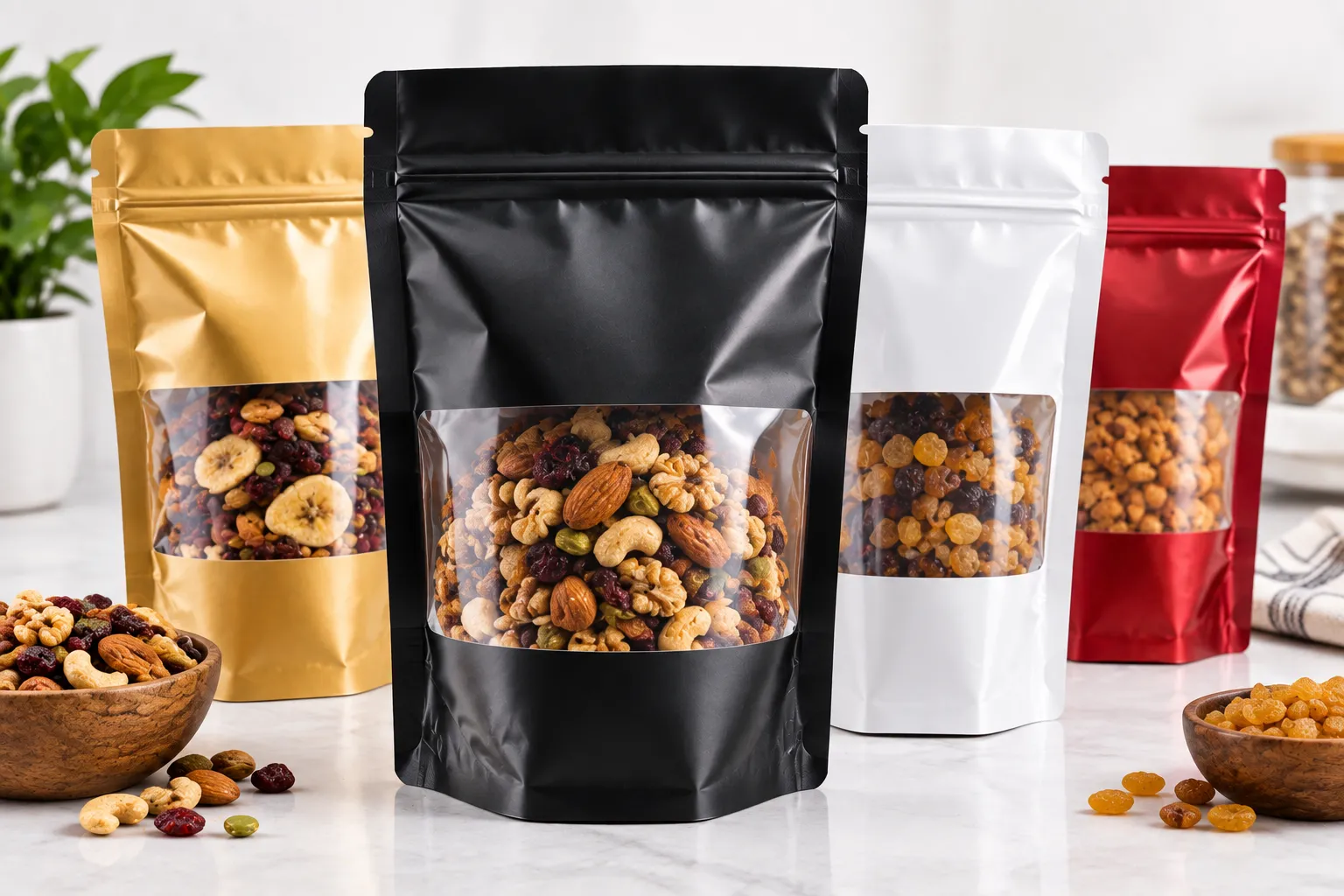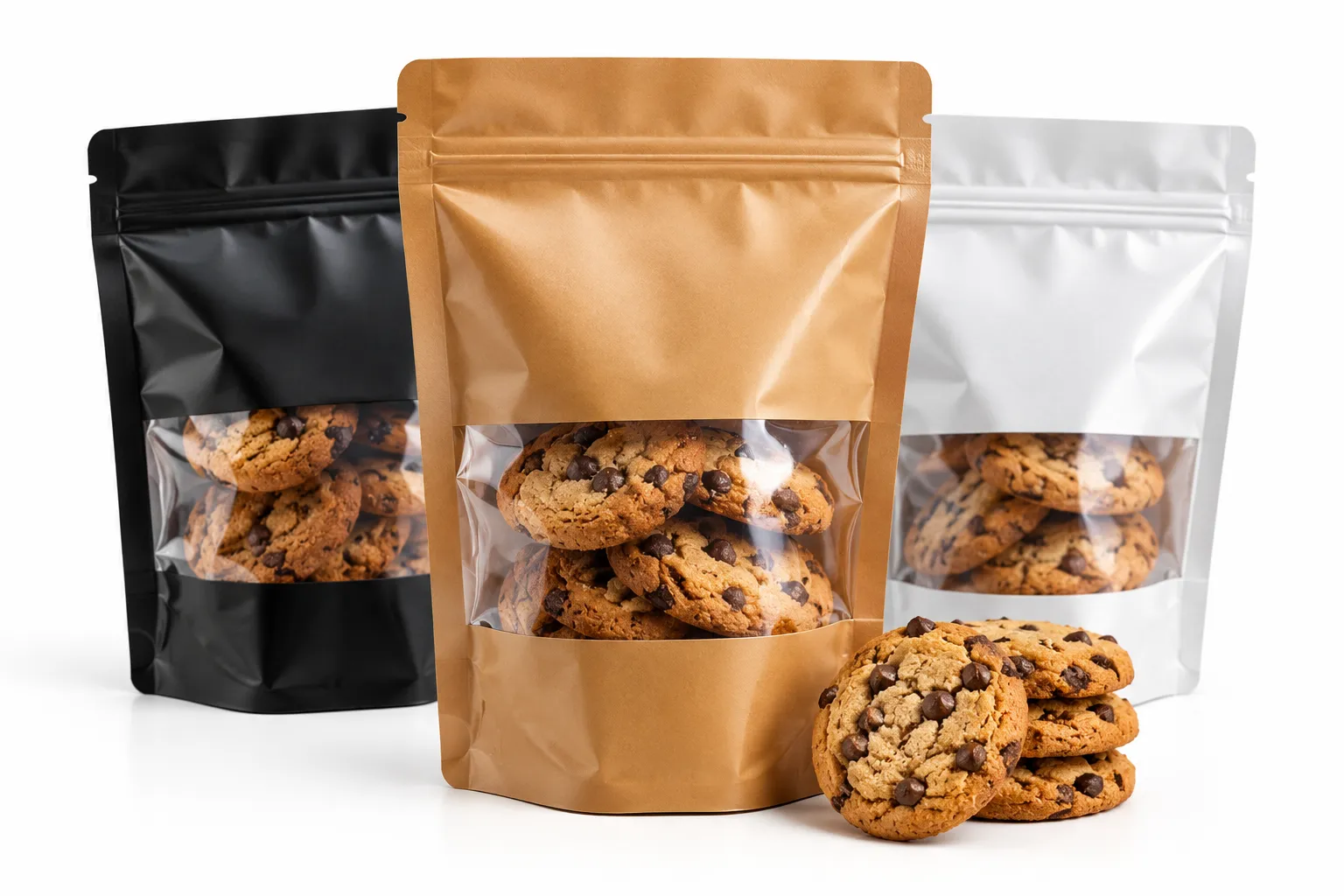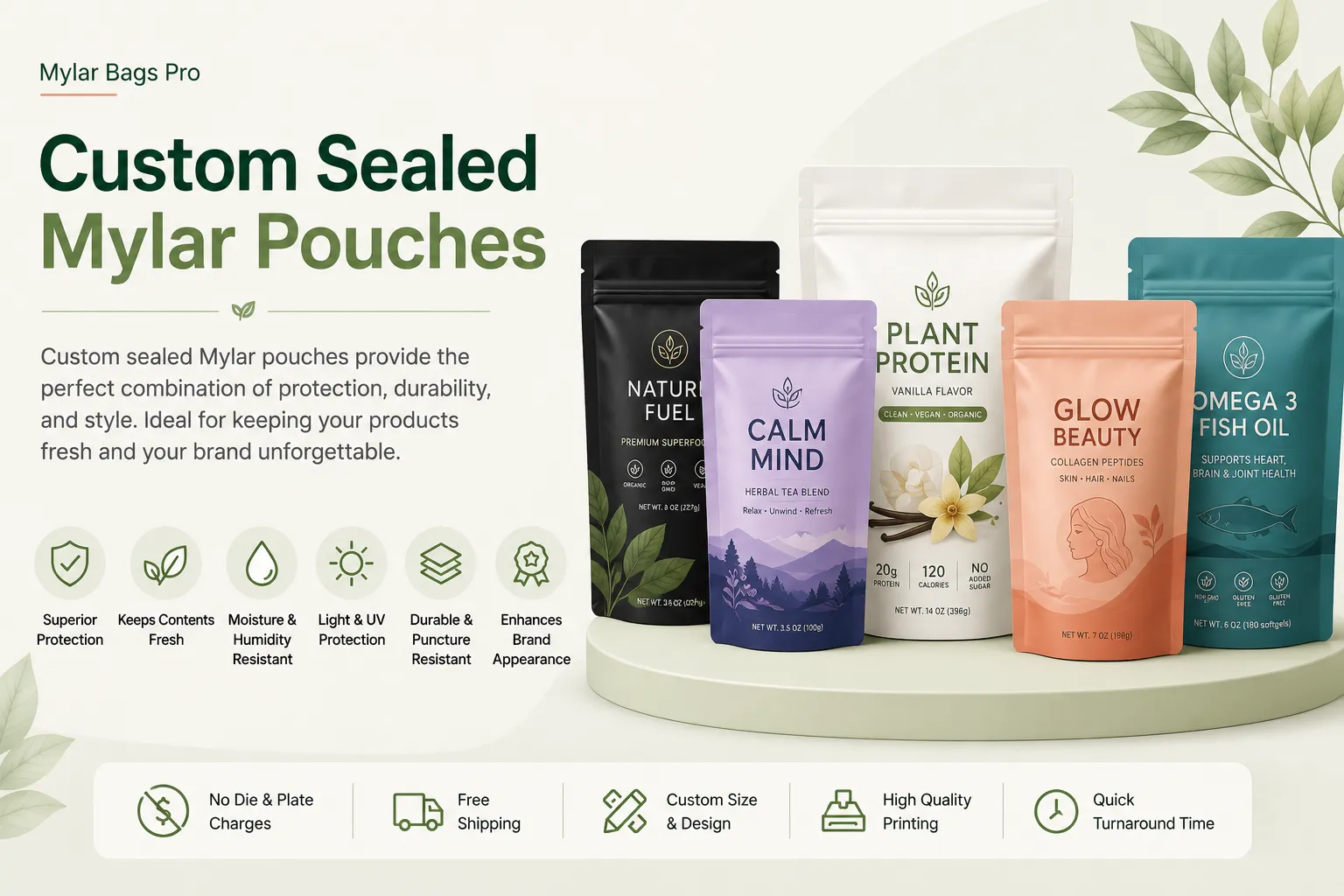
A weak seal ruins a good product faster than almost anything else in the supply chain. Coffee goes stale, cosmetics separate, pet treats go soft, and a customer who opens a damaged bag rarely gives a brand a second try. Custom sealed mylar pouches solve this by locking out air, moisture, and light at the seam, and suppliers like Mylar Bags Pro build these pouches for brands across food, cannabis, cosmetics, and pet product categories.
Have you ever wondered why so many different industries land on the same packaging material? Coffee roasters, supplement brands, and pet treat makers share one problem: their product degrades the moment it meets open air. Custom sealed mylar pouches close that gap with a barrier film and a seal strong enough to survive shipping, warehouse storage, and months on a retail shelf. This piece breaks down the pouch types, the sealing process, real cost ranges, and what to ask before placing an order.
A sealed mylar pouch pairs a multi-layer barrier film with a heat-fused edge that keeps the package airtight from the moment it leaves the filling line. The film itself, officially BoPET (biaxially-oriented polyethylene terephthalate), combines a polyester outer layer, a metalized or foil middle layer, and a polyethylene inner layer that melts and bonds under heat.
That bonded seam is what separates a sealed pouch from a bag with a simple fold-over closure. A press-to-close zipper resists casual handling, but only a true heat seal creates a seam strong enough to survive a cross-country freight run without a leak. The global mylar bag market topped USD 3.8 billion in 2025, according to Grand View Research (2025), with growth tied directly to brands switching from boxes and jars to sealed flexible pouches.
Custom sealed mylar pouches for your products carry a second advantage beyond the barrier itself: shipping weight. A sealed pouch weighs a fraction of a glass jar or rigid tub holding the same volume, which cuts freight costs on every pallet. Coffee roasters, cannabis brands, and pet treat makers have all leaned into this shift for exactly that reason.
Not every product needs a heat seal alone, and not every closure style fits every industry, so it helps to see the main options side by side before you commit to one.
| Pouch Type | Closure | Barrier Level | Best For | Typical Cost per Unit |
|---|---|---|---|---|
| Flat three-side-seal | Heat-seal only | High | Single-use samples, tea, spices | $0.05–$0.20 |
| Stand-up pouch | Press-to-close zipper | High | Coffee, pet treats, powders | $0.15–$0.50 |
| Child-resistant stand-up | ASTM D3475 zipper | High | Cannabis, melatonin, adult-strength products | $0.60–$1.25 |
| Side-gusset pouch | Slider zipper | Moderate-high | Cosmetics, bulk snacks, retail display items | $0.25–$0.70 |
A three-side-seal bag costs the least and works well for a single-use sample or a small tea portion that a customer opens and finishes right away. A cannabis brand or any product with a child-resistant labeling requirement needs the certified zipper track, since a standard press-to-close closure will not meet state packaging law in most markets. A cosmetics brand selling a reusable pouch for a refill product often picks the slider zipper for its smoother, more premium open-and-close feel.
Getting from a logo file to a warehouse of finished pouches follows a fairly consistent path, and knowing the steps helps you catch a problem before it turns into a delayed launch.
The supplier starts by confirming film specs against your product, checking whether you need a full foil barrier or a lighter metalized layer. Printing comes next, using flexographic plates for large runs or digital printing for smaller batches under a few thousand units. A packaging engineer with more than a decade in custom manufacturing at a Cubit Packaging-style facility put it simply: brands that lock artwork dimensions before the print run starts avoid the reprint fees that eat into a first order's margin.
After printing, the film gets die-cut into the chosen pouch shape, and the zipper track, valve, or tear notch gets bonded on at this stage. Empty pouches then move to the filling line, where product drops in by weight or volume, and the final heat seal closes the top edge. A batch code and any required compliance text print during this last step, which matters most for food-contact and cannabis packaging, where labeling rules are strict.
Cost questions come up in nearly every packaging conversation, and the final number depends on more than the pouch size alone. Custom mylar pouches run from roughly five cents per unit for a small flat bag up to over a dollar for a large child-resistant stand-up pouch with full-color printing, according to Cubit Packaging's 2026 pricing data.
Order volume moves the price the most. A short digital print run of 1,000 units costs more per bag than a flexographic run of 50,000, since plate and setup costs spread across fewer pieces on a small order. Barrier strength adds cost too, since a heavier foil laminate built for long-term storage costs more than a lighter, short-shelf-life film.
Closure type is the third factor. A standard press-to-close zipper is the cheapest reclosable option, while a certified child-resistant zipper or a degassing valve for coffee both add a per-unit premium. Cannabis packaging in particular carries this cost, since the segment represents a USD 1.8 billion slice of the market growing at roughly 12% a year, driven largely by state legalization and the compliance packaging it requires, according to BDSA (2024).
What actually separates a good pouch supplier from a reseller who ships whatever film is cheapest that week? A specialist that focuses on custom sealed mylar pouches, like Mylar Bags Pro, has already solved for oxygen barrier testing, food-contact compliance, and the seal strength testing that keeps a pouch from failing in transit. A general packaging broker juggling boxes, labels, and bags rarely carries that same depth on barrier film performance.
Ask three questions before signing off on an order. Will the supplier confirm the oxygen and moisture barrier rating in writing, not just a marketing claim? Does the film meet FDA food-contact standards if your product touches skin or gets consumed? And what is the real minimum order quantity, since a low headline price sometimes hides a 10,000-unit floor that ties up cash a smaller brand cannot spare.
A small cosmetics brand launching a refillable lip balm pouch ran into this exact problem. Its first quote looked attractive, but the minimum order sat at 20,000 units. Moving to a supplier with a 2,000-unit minimum on a side-gusset slider pouch let the brand test the concept, confirm demand, and reorder at scale once sales proved out.
If you are weighing pouch styles or closure types for a new product launch, Mylar Bags Pro can quote against your specific fill weight, barrier needs, and order size, and can send physical samples before you commit to a production run. Getting the barrier spec and seal strength confirmed in writing up front saves both time and reprint costs later.
What is the difference between a heat-sealed pouch and a zipper pouch?
A heat-sealed pouch fuses the film edges permanently and cannot be reopened without cutting or tearing it. A zipper pouch adds a reclosable track above or below the heat seal, letting the customer reopen and reseal the bag after first use.
How much do custom sealed mylar pouches cost per unit?
Pricing runs from about $0.05 per unit for a small flat three-side-seal bag up to $1.25 or more for a large child-resistant stand-up pouch with full-color printing. Order volume, barrier thickness, and closure type all move the final price.
What is the minimum order quantity for custom printed pouches?
Minimums vary by supplier and print method. Digital printing often starts around 500 to 2,000 units, while flexographic printing for larger custom runs typically requires 10,000 units or more to reach a reasonable per-unit price.
Are custom sealed mylar pouches food safe? Yes, provided the film meets FDA food-contact material standards. Reputable suppliers can confirm this in writing and will use food-grade inks on any print that sits near the product side of the pouch.
Do cannabis products require special sealed pouch packaging?
Most states with legal cannabis sales require child-resistant packaging certified to ASTM D3475, along with tamper-evident features and specific labeling. A supplier experienced in cannabis packaging will already build pouches that meet these state-level requirements.
How long does a custom sealed mylar pouch keep a product fresh?
Shelf life depends on the barrier thickness and whether an oxygen absorber goes inside the sealed bag. A well-sealed, foil-laminated pouch can protect dry goods for well beyond a year, while lighter films suit shorter-shelf-life retail products.
Can custom sealed pouches be resealed after the first opening?
A pure heat-seal pouch cannot be resealed once opened. Adding a zipper track above the seal solves this, letting customers reopen and close the bag multiple times while the original heat seal still protects the product until first use.
What sizes are available for custom sealed mylar pouches?
Suppliers typically offer sizes from small 3-by-4-inch sample bags up to large multi-pound stand-up pouches. Custom die-cutting can also produce shapes and gusset widths built around a specific fill volume rather than a standard stock size.
Do sealed mylar pouches work for cosmetics and skincare products? Yes. A side-gusset or stand-up pouch with a slider zipper suits refillable creams, powders, and skincare samples well, since the barrier film protects active ingredients from oxidation and the closure supports repeat use.
Is custom pouch packaging recyclable in the UK or Canada?
Standard multi-layer mylar is difficult to recycle through most curbside programs because it combines several material types. Brands selling into the UK or Canada should check current extended producer responsibility rules, since requirements are tightening in both markets.
What turnaround time should I expect for a custom pouch order?
Digital print runs on smaller orders often ship in 10 to 15 business days. Larger flexographic orders with custom die-cut shapes can take four to six weeks once artwork and film specs are finalized.
Do sealed pouches cost less to ship than jars or rigid containers?
Yes, in most cases. A sealed pouch weighs and packs far lighter than a glass jar or rigid tub holding the same product volume, which lowers freight cost per unit and reduces the box count needed for the same pallet weight.